



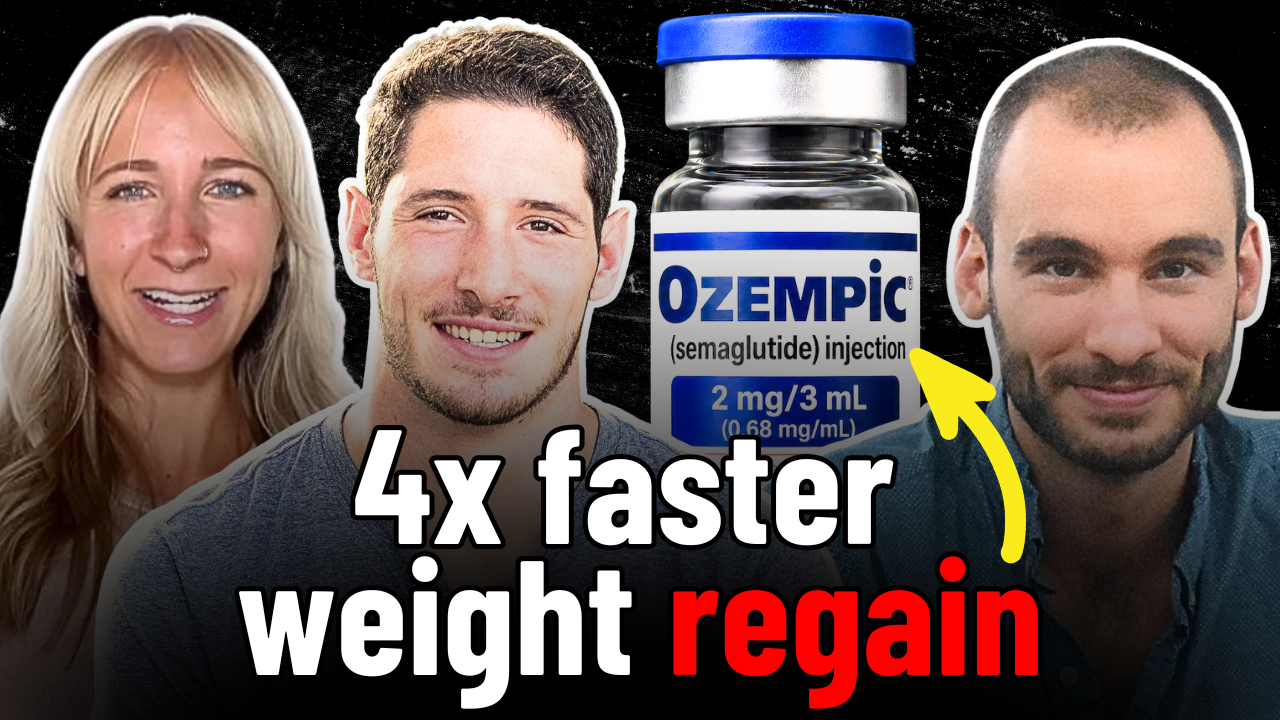
27 Apr 2026 BV #27: GLP-1: The Metabolic ‘Credit Card’ You Can’t Pay Back?
Listen to the podcast on Apple Podcasts | Google Podcasts | Spotify
In this episode we discuss:
0:00 – intro
0:39 – unpacking Super Bowl ads for GLP-1 weight loss drugs
5:15 – why GLP-1 marketing is falling flat: are people waking up?
10:26 – are pharmaceuticals the solution for the modern food system?
14:40 – GLP-1 commercial downplays potential serious side effects
18:22 – the benefits of GLP-1 agonists for glucose metabolism
19:45 – the major difference between GLP-1 drugs and our own natural GLP-1 hormone
21:49 – GLP-1 drugs lead to increased risk of depression, anxiety, and suicidal behavior
23:37 – gut problems, muscle loss, and 4x faster weight regain (additional side effects from GLP-1 drugs)
25:26 – risk vs. reward for GLP-1 drugs
29:53 –are GLP-1 drugs safe and effective long-term?
33:37 – GLP-1 drugs vs. diet and exercise
38:40 – using GLP-1 drugs for losing the stubborn weight and taking willpower out of the equation
43:13 – the “metabolic benefits” of GLP-1 medications
45:21 – whether it ever makes sense to take GLP-1 drugs for weight loss or improved health
48:31 – weight regain on GLP-1 drugs: are they a sustainable solution?
50:58 – severe undereating leads to faster weight regain, especially body fat
56:14 – weighing the convenience of taking weight loss drugs vs the side effects and long-term costs
58:23 – “food noise” vs. hunger and cravings
1:02:03 – how to get rid of “food noise” and chronic hunger and cravings
1:05:08 – sharing a listener success story: from carnivore and sad to crushing life with a bioenergetic approach
Theresa Piela 0:00
Okay, welcome to the bioenergetic view. I'm your host, Theresa piela, joined, as always, by Jay Feldman and Mike Fave today, we'll be talking about the lovely GLP one drugs, and closing out the show with some success stories and questions. Let's get started, guys. I want to just dive right into this first commercial. I think everyone we know is thinking about GLP one drugs, or knows someone, or they're hearing about it, and these commercials are a great reflection of just the ridiculousness of this time. So here we go.
Speaker 1 0:39
Obesity is America's deadliest epidemic. This is America. 74% of us are overweight, and obesity leads to half a million deaths each year. Why you just have to stop eating, Jimmy, this is America. Something's broken. It's not our bodies, it's the system. Welcome to weight loss in America, a $160 billion industry that feeds on our failure. There are medications that work, but the price for profits not patients. This system wasn't built to help us. It was built to keep us sick and stuck, but not anymore. Him's and hers offers life changing, weight loss medications, they're affordable, Doctor trusted and formulated. In the USA, you get a treatment plan designed by a doctor to fit your body goals and lifestyle. You deserve to feel great in your body. This is the future of healthcare. This is hims and hers. Join us in the fight for a Healthier America
Theresa Piela 1:40
while we've got a solution. It looks like a really great one. Mike, tell us exactly why this is a great option for what we're facing with the obesity epidemic.
Mike Fave 1:50
I think the commercial is a bit there's actually a lot of negative response to this commercial, because it kind of highlighted the idea that the system is a problem, right? That the diet is a problem, the food structure is a problem, the medical system is a problem. People aren't getting the care that they needed, and then the solution was then positioned as a pharmaceutical option. So it's like, we're we understand your pain, we know the system is a problem. Here's a system solution. So it's a very, it was a it was a very, I think this was a Super Bowl commercial, if I remember correctly, so that it's a very interesting ad. And I'm not surprised that people had a negative response to this. I think when I look at this type of problem, when you think about obesity or people who are dealing with weight issues, I do think that there's a combination of not only systematic issues in terms of the food supply and the foods that people are eating, and then the different things that people are exposed to from the food supply, but then I also think that there is people are having metabolic issues because of those things. And so I think the solution is more so getting people to eat well and correct these, these different components, which I'm not gaslighting people here, I know that that actually can be difficult, and it's also difficult to know exactly what to do, because there's quite a bit of different perspectives in the different spheres. But at the same time, I think the idea that we just need to take a pill or a solution to solve this problem that's fundamentally created by poor lifestyle and dietary changes is questionable. And then I also think, and with a lot of people running these, these GLP one medications, if they are not run correctly, they can cause significant problems and actually lead to a worse state down the line where, yes, the body fat has been lost, or a decent portion of it has been lost, but also a decent portion of lean muscle tissue as well as bone mask can be lost if it's not done appropriately. So fundamentally, regardless of whether you use the medication or not, you still have to correct dietary and lifestyle practices, and if, especially if you're going to use the medication, the dietary practices are going to be exceptionally important to minimize the negative effects of the medications. So it's a it's just a weird dynamic to we're going to give you this drug solution for this lifestyle and dietary problem, and then present it as if we are on your side and we're against the system. It's, you know, it's, it's a, it's almost like an oxymoron to present it in that manner, like it's, for me, I, you know, I think it misses the point entirely, like misses what the underlying problem is. And this is not to say that people don't have a hard time losing weight, or that the dietary stuff is very clear. I'm not gaslighting that. I'm just saying that we need to figure out what the correct way is in terms of eating, in terms of organizing the lifestyle, so that people don't develop this problem in the first place. And then what are the strategies they can use, from that standpoint, first, to get things under control, instead of just, hey, just take this, this this shot once a week, or take this pill and. Just basically knocks out your appetite and then you'll lose weight. It's not really correcting the underlying problem. It's getting people hooked into another system of having to perpetually take these medications.
Theresa Piela 5:11
Jay, what was your immediate reaction to this?
Speaker 2 5:16
It feels deceitful, right? You watch the beginning of the commercial, and it's like, you know, pointing out problems that people feel right. It's, it's actually touching on, I think, what a lot of people you know have concerns with when it comes to what they see around them, right, that the system isn't working, or working for them or supporting them, that you know healthcare costs are insane that, you know, Big Pharma is generally harming people and encouraging them to use drugs that they may or may not need, or may or may not have side effects that aren't properly disclosed, or, you know, that aren't at least properly acknowledged. And there's the big food industry that makes it harder and harder to get, you know, good quality food, you know, not have all the pesticide exposure, like having good quality food that's reasonably priced. I mean, just pushing, not only heavily processed foods, but you know, also an industry that pushed vegetable seed oils, you know, polyunsaturated fats under the guys that they're heart healthy, you know, all of that. Like that. People feel that people are kind of awake to this system and how it works. So you have this commercial that's taking advantage of that, and then, and I do think it failed, as Mike was saying, like people just really saw through it, but, but they position themselves as if we're on your side, like we see all those problems, and we have the solution, except their solution is 100% within the system. It's a pharmaceutical drug that they want you on for your entire life, and they want to make a ton of money on and, you know, they started off saying, like, weight loss is $160 billion industry, like pointing out the fact that there's a lot of money to be made here when it comes to weight loss, as if they're independent of that, like we're not making money on what we're going to sell you here. Like this is coming out of the goodness of our own hearts. You know, we're just trying to help you, but their solution is a pharmaceutical drug that is 100% within the system and is going to make them a ton of money, to the point where they're putting it out of Super Bowl commercial like, I mean, I don't know how expensive Super Bowl commercials are these days, but I'm sure it's millions. So yeah, the there's so much irony there. And again, it's interesting that they have their finger on the pulse so much that they created the commercial and this style compared to, like the next Super Bowl commercial we'll look at. But again, they failed miserably, which I think says something as far as people's awareness, right? I don't think they were really fooling people with this, which is good. I think that's a great thing. I think it says a lot about how out of touch the, you know, these industries are with the average person, and also how, you know, we talked about all the negatives of social media and and online health information and everything, but at the same time, I think it's allowed people to become a little bit more aware of these tactics and what's actually going on around them and keeping them in the place that they're in. So just like, it's almost just like an interesting piece of cultural content at this point, like, less so than it is about the GLP one drugs themselves, and especially after the next commercial. Like, I think, you know, we'll dig into maybe more of the details of potential positives and negatives with GLP one drugs when they could make sense and all that, because, again, especially in the next one, the fact that this is a medication that has physiological health effects, that can be positive and negative is really downplayed, but I think we'll get into that in a minute. But yeah, just, it's just interesting, conceptually and interesting to view as like a cultural phenomenon. But I have to say, I'm glad that like this isn't tricking people, and that it did seem like a failure, at least, I hope it was when it comes to creating a diet for optimal health. There's a lot of conflicting information out there, and that's why I've created the energy balance food guide to help you determine exactly what to eat to optimally support your metabolism and help you lose weight, improve your digestion, get amazing sleep, boost your energy and so much more. The energy balance. Food Guide is a one page infographic that organizes foods on a spectrum based on how effectively they support your metabolism, and it also has a separate spectrum that adjusts the scale for you in the case that you're dealing with various digestive symptoms. The Food Guide makes it extremely easy to get started with a bioenergetic approach to optimizing your health. So head over to Jay Feldman wellness.com/guide to download your free energy balance Food Guide.
Theresa Piela 9:32
I like the way you phrase that, yeah, cultural phenomenon, because it's, it's like the psychology of it, like, we're your friend, we're looking out for you trust us. Oh, we're gonna try to be sneaky and fail and yeah, it's just a fascinating glimpse of our wild times. Who can you trust, who actually has your best interest in mind? Probably not, people that are trying to profit off of you, sneakily and evilly.
Speaker 2 9:54
So, right? And it's like the insinuation too, is like before all of this industry, you. People were healthy and they, you know, it's not like everything was stacked against them. And instead of the solution being like, let's go back to that time, and we're, you know, we're offering some like, healthy food option or lifestyle option, you know, to get you back to 100 years ago, when people were at a healthy weight on average, and obesity was a 10th of what it was now, and all of that without medications. But the, again, the solution they offer is the exact opposite of that. So pretty funny. Well, that's
Mike Fave 10:27
it's interesting too, because they're catching, they're tapping into, like, I think in the post covid era, you have this, this culture that's like, we don't trust the main like, we don't trust the authorities, we don't trust the regulating body. We don't trust these big industries anymore. So it's like, let's make an ad tapping into the fact that people don't trust these things where there's like, there's like a there's like a seed of doubt about them. So we're going to hit that, and we're going to empathize with people's perspective here, and then we're going to sell them the same solution. So it's like, we don't, we know that you guys don't trust all this stuff. There's this big industry, all this type of stuff, and we know that there's like, this huge problem with people's health and weight in the country. So we understand, you here's the here's the solution, and then the solution is like, like, a pharmaceutical option that doesn't solve the fundamental problem. Just basically gets you, like, interesting too. When you look at the medication, like, the drug just makes you eat less, like, that's there's other things with insulin sensitivity and insulin production and lowering glucagon, etc, but fundamentally, the weight loss pieces, it just makes you really good at not eating, which is, like, it's like, okay, so the food supply is pretty bad, and you've gained quite a bit of weight with this kind of crappy food supply. But we're going to sell you medication so that you just don't eat the food that food supply now. And you know, we understand where you're coming from. Just take this so it's, it is a bit, I know, the way that I think the reason that there was such a negative response to it is because it, it does feel like disingenuous to, like, try to empathetically tap into this cultural perspective and then harness that to try to move a product that still exists within the system and doesn't fundamentally solve the underlying problem. So it is, um, you know, the the intention is, I think people the intention behind it, people are like, Oh, this is a little bit little bit icky. This is, this is, this doesn't feel very good the way that this was positioned. Because it's, it starts out good, you know, it's like, you start, you go, you're in the movie, you're getting to the end of the movie. It's like, okay, this is interesting commercial. The graphics are great, like the, you know, they I under, they're, they're really tapping into what we feel. And it's like, you get to the climax of it, and it's like, oh, we have this pill. Hey, we're going to ship it right to your house. You just sign up here. So it's the, you know, that's the it does. It disappointing in the end, that that is what was, that's what's pushed as the final solution, especially if you understand the initial problem, then you wouldn't position that solution. That's the other thing, right? It's like, if you know there's problems with food supply, with dietary pieces, with lifestyle components, you wouldn't then say, Okay, here's this drug that just makes you eat less of that stuff and you'll lose the weight.
Speaker 2 13:12
Yeah, it's like a dream drug of the industry. And like, if this, if this commercial, landed, it's like, that's what they want, more than anything, to still, you know, to not to like on the surface, blame all of those other areas, but still keep them fully intact, while just then selling you a new drug that they're going to make a ton of money on. You know, it's like the classic, like political party, blaming the other party and saying they're going to do it differently, but still maintaining all the status quo in the meantime. And it's like trying to, trying to earn your trust by taking advantage of your distrust of the system, but not actually having any desire at all to change the system. And yeah, it's like, that's exactly what they want. Is for you to think that you're fighting whatever it whatever it is, and the reality is that you're just playing right into it. And again, which is part which is part of why it's so kind of encouraging that that this didn't land, you know, that that people
Mike Fave 14:08
did see through it. You're fighting this 100 $60 billion industry by directly paying into that industry. Yeah, pay us more money to fight this industry.
Theresa Piela 14:19
Well, I guess that's a good a good sign that we do have some critical thinking skills left. Because sometimes I wonder what's happening to to everyone you know in terms of their ability to blindly trust or not look into the side effects that we're going to be talking about. But let's, let's watch this second
Speaker 3 14:41
one big news America, we go be now comes in a pill so adults with obesity can lose weight and keep it all along with diet and exercise. Yes, thank you. DJ Khaled, be honest, if there was a pill that made other helpful things possible, you take
Speaker 4 14:55
if there was a pill that could help me, parallel park, I'd take it. Julio. If there was a pill to make me a pro wrestler, I take it say. Uncle Karen,
Speaker 3 15:04
if there was a pill that helped me rescue more kittens, I'd take it
Speaker 5 15:10
low arm lady, if there was a pill that made people stop being so judgy about how to lose weight,
Speaker 3 15:17
maybe we don't need a pill for everything, but for managing weight, there's we go get the first and only GLP, one pill for weight loss. Don't take
Speaker 6 15:25
if you or your family had MTC, me and two. Or if allergic to it, tell your provider. If you plan to have surgery or a procedure, are breastfeeding, pregnant or plan to be stop taking and get medical help right away. If you get a lump or swelling in your neck, severe stomach pain or any of these allergic reactions, serious side effects may include pancreas inflammation and gallbladder or severe stomach problems. Call your prescriber if you have any of these symptoms, we go V may cause low blood sugar in people with diabetes, especially if you take medicines for it, call your prescriber if you experience vision changes or heart racing at rest. Side effects of nausea, vomiting and diarrhea can lead to dehydration, which may cause kidney problems.
Unknown Speaker 16:01
That's not your car, is it?
Unknown Speaker 16:04
Ask your prescriber about once daily with govi pill.
Theresa Piela 16:12
So from a marketing perspective, it's a lot more believable. You know, it's sold as this magic bullet. And even the side effects, they sound manageable. I think this can be a nice, a nice way to segue into some of these side effects, and if they are worth it, for people that are maybe even considering it, or even know maybe their parent is on one of these drugs. Jay, what are your thoughts?
Speaker 2 16:37
There's a lot to say as far as side effects and general effects. I think there's also a lot to say about the angle here, too. As you're saying, it's a lot more palatable. I think it's more successful, which, again, is, I think unfortunate. I think it's a lot more harmful because of that. You know, the first one, this idea of like, take this pill to fight the system is a pretty hard sell. But here the sell is, if you had a pill that made your life easier in any number of ways or allowed you to help other people, you would do it right like this is just the equivalent of taking a pill that helps you save more cats out of trees, or helps you accomplish your dreams by becoming a pro wrestler or whatever it is like. Is, like, that's all this is. It's just, and now you now you don't even have to inject it, right? It's, it's just really convenient, really easy, and it just helps you do, like, accomplish the things that you're aiming to do. And in this case, of course, it's, you know, talking about weight loss. And it really diminishes the fact that this is a medication. Like this is a drug, and it has a number of effects that are important to be aware of, some of which could be viewed as positive, some of which could be viewed as negative. And, you know, it reminds me a little bit of some of like the commercials for not only just like antidepressants, but drugs that are used for autoimmune conditions and other things, where it's just like a visual of someone who's happy. It's like they're happy now that they're on this medication, their life is good, like there's don't treat this as a medication. Treat this as a pill that makes you feel better, or makes you happy or happier, or helps you have a better life. And that's, I think, far more concerning, yeah, I mean, just to touch a little bit, maybe, about the physiology here and how they're actually working, and then how those side effects come in. So these drugs, they're, you know, in this category of GLP one agonist drugs, and GOP one is something that we produce endogenously. It's something that we produce in our guts in response to food intake, or specifically carb intake, and there's a few things it does. It basically prepares our body to utilize carbs, so it increases the amount of insulin we produce, and actually suppresses the amount of glucagon we produce, which helps us utilize carbs better. And we've talked about that a number of times, about how insulin is actually supportive of glucose metabolism, and glucagon interferes with it. And we've had a lot of people who have pushed back against that said, well, that will cause weight gain, of course, because glucagon liberates fat from the fat stores, and insulin causes everything to be stored in the fat store. So you know, insulin is a fat stored hormone, and glucagon is a is the good hormone that you want, and yet, we have a prime example here of a drug that encourages the release of insulin, reduces the activity of or the release of glucagon. And yet, obviously, that's not preventing large amounts of weight loss that are seen with these drugs. So it's just a little aside that's worth mentioning. But another major effect is that it slows gastric emptying, so food is moving through the digestive system slower. And there's something else that's really notable between the drugs and the natural GOP one that we produce. The natural GOP one that we produce is only around for a couple of minutes. It's got a half life of about two minutes, and it doesn't cross any. To the nervous system very well. It doesn't cross the blood brain barrier very well. And when it does, it's it's very rapid, or even before it does, it's normally very rapidly degraded. Whereas these GLP one drugs, the reason why you can use them as an injection, you know, once a week, is because they last for a lot longer. They last for they have a half life of more like seven days instead of two minutes. So you have way more of this in your system than you would
Speaker 2 20:24
naturally at any point, and you have a lot more that's making its way into the brain and the nervous system, and that's actually where you see more of the like appetite suppression, because you have reduced activity of the dopaminergic system in the like inside the brain, and this is the system that like provides reward, right? When you do something that feels good, whether it's eating or accomplishing something, it leads to this release of dopamine, and this pathway gets suppressed by these drugs. And this is part of where you have the reduced hunger and the reduced food cravings, and what a lot of people are calling food noise, which is really just hunger and cravings, that they're kind of branding as something different. And maybe we can come back to that, because I don't know about you guys, but I see that all the time now, it's like, I wasn't hungry, I just had food noise. Or this is helping people who are just dealing with food noise. It's a different physiological process. It's it's totally independent of just hunger for not eating enough or not actually satisfying your physiological needs. But it's like a made up term that people are pretending is different from the response to not satisfying your physiological needs. When you're either not eating enough or not getting the nutrients you need, you can feel physically full and still be hungry. People are calling that food noise, but it's just, I mean, it's hunger. It's just on a deeper physiological level in any case, so you have suppression there. And that's, it's worth noting that, because it also leads to suppression of pleasure from anything. And so you see this mentioned a lot in people who are on these drugs, is that they're they're not excited about doing things that they're excited about before. Some people mentioning that it can affect libido and romantic interest, but also just like life. You know, maybe we'll, we'll talk about some of these examples in the future, but people talking about how they're just their mood is a little lower. They're a little bit less excited about life, but it's worth it to have the six pack, or it's worth it for the weight loss or something like that. And we see this in the literature, to the rates of or the increases in depression, anxiety and suicidal behavior from these drugs is massive, like there's huge, huge increases in those as were considered to be side effects. I mean, they're just direct effects of of the drug. So it's something to be aware of. It also just understanding the context a little bit. GLP, one activity in the nervous system is generally activated by intense stress. So in a way, this is a stress hormone. When it's when we're having the exposure in the nervous system, and when we're under severe stress, we do have appetite suppression. I think a lot of people, when they maybe first experience like acute stress, there could be an increase in hunger, but when you have like deep, chronic stress over time, you can end up in that kind of low appetite, or especially when it's intense stress, like low appetite, low hunger, obviously a lack of pleasure and dopaminergic activity. But you also see physiologically that GLP one in the nervous system activates the HPA axis, so you have increased cortisol as a result of of GLP one in the in the nervous system. So that's just a few kind of specifics to mention. There are a number of other side effects that, you know, we heard a little bit of in the commercial gi ones are huge, lot of people with really, really bad gi effects. And you hear about people like, trying a bunch of different GLP one drugs to see if they can find one that doesn't cause the same gi side effects. But I've seen them have like, I've seen people use very low doses, like Mike, what are people are calling micro doses of these drugs, just to kind of try them out, or because their functional medicine doctor was suggesting it, and they have gi effects, like massive responses, you know, nausea and vomiting and heartburn, and they stopped the drugs, and they're still dealing with these things for months, like it really can wreck the digestive system, so It's something to be aware of. And of course, muscle loss, lean mass loss is a big one as well, with the weight loss that comes with these drugs. And also, speaking about the kind of industry aspect here, there was a study that came out showing that when you stop the drugs, you regain the weight four times faster than if you stopped diet and exercise. So if you lose weight from diet and exercise and then you stop it, the weight regained is dramatically different from when you lose weight on these drugs, but just a couple of the direct side effects to be aware of. There's also, I think, concerns about the direct effect of appetite suppression and whether that's actually a good thing. Whether it's actually a good solution to weight loss, you know, we talk about all the time the consequences of low calorie intake, you know, and why we don't just suggest, you know, starvation diets when it comes to weight loss. So I'll kind of pause there. I think there's a lot to unpack, but I'm sure you have some some things to share. Mike, so I'll let you hop in. Jump On In.
Mike Fave 25:20
Mike, yeah, there's a lot of things that you mentioned there. I think the problem with the commercials and with the advertising is, I don't think you get a fair and then even what you're getting in social media is, I don't think that there's a necessarily a fair, risk reward ratio on what you're getting yourself into. And I think with any intervention, whether it's a medication, whether it's a dietary intervention, whether it's an exercise intervention, the number one question is, what context Am I putting this intervention? And then what is the risk and reward for that given context? So in this circumstance, to position some of these medications as I need to lose a couple pounds, so I'm just going to take this medication. It's going to nuke my appetite and basically, like, make me extremely full by pushing heavily on these, these, these giant, well, there's multiple the Red Two Tribes, three different components. Then terse appetite would be two. But for the regular GLP ones, just like one specific axis to kind of just be able to not eat, be okay with basically starving myself, to some extent to lose the weight. It's like in that circumstance, you have all the side effects. You have the delayed gastric emptying. You have potential impacts on the pancreas. You have potential impacts on the hypothalamic pituitary adrenal axis. You have the impacts on mood regulation and anxiety, depression, suicidal ideation, etc, that Jay mentioned. And then if it's not set up appropriately, you have impacts long term on metabolic function, from a hormonal standpoint, from starving yourself and then loss of lean tissue and bone mass. If the diet is not set up appropriately, so it's like, Yes, it'll nuke your appetite and it will get you to lose weight because you're not going to eat, and it does have improvements on insulin sensitivity because it stimulates beta cell function and insulin production and lower spook gun, but then you have all this other stuff. So in this person's context, just want to lose a couple pounds. Does it necessarily make sense, especially if the diet is not set up appropriately? No, it does not make sense to use as a, as a as an option, because the side effect profile, the risk profile of the medication severely outweighs the benefit of the medication in this context, and at the same time, the individual could just adjust their diet and also engage in some type of maybe resistance training regimen, or something like this, and see body composition change in a much more favorable way where they're not just losing body fat, they're also gaining lean muscle mass. So in that circumstance, we have it's an imbalanced risk reward ratio. In another circumstance, if you have somebody pre diabetic, type two diabetic, obese, and then they're looking to use this medication to help them bring their A 1c value down, lower glucagon signaling, improve insulin sensitivity, and they don't have this history of pancreatitis, something like this, the picture becomes a little bit different, the picture because now you have a much higher risk profile. Long term, you have much more significant health concerns going on, and now you're looking, okay, what interventions can I put into place to turn this around. And then also in putting those interventions in, what risk am I opening myself up to? And then now you balance between the two, like, is this risk profile? Are these side effects worth the outcome for this? And I think you can make a stronger case for somebody type two diabetic, pre diabetic, with obesity, for using something like this is what, which is what the medications were initially marketed for. Now, again, even if in that circumstance, the appropriate interventions have to be put in place in terms of setting up the diet and whatnot, micronutrients and then concerns about the hormonal impact. So with these, these, with this picture in mind, when you get a commercial like this, where it's like, Oh, you just take this medication and it's basically makes you better at parallel parking. It's absurd, like, It's an absurd comparison point. And it's, it's a little bit it's disingenuous in general, because it's like, well, tell us the actual risk reward profile. Instead, you get this emotional framing, which this is done intentionally. Of it'll just make if you could do something that just makes your life like, just makes whatever you want to do easier. You would do that right? And it's like, yes, I would do that. You're correct. I would, unless you tell me about all the other potential negative effects that that thing can induce that I'm trading for this, this particular benefit. And also, the other question is, what are the alternatives? Because there are alternatives, particularly for weight loss, that do work and that you just have to put them in place. So people just have to adjust it. And that is actually more fundamental to the issue, because the other piece with this is that with weight loss, so say you go into GLP one, and you lose the weight. Most people actually, I think they regain their total weight within. One to two years, or at least, I think, was 70% of their weight back, and most people are off the medication within one to two years because of the side effect profile. So So you have to think, Okay, what say I'm running this medication? If I extend out the time frame and I look at the long term trajectory of this, what happens? Well, I never learned the habits and skills that I needed to to to navigate the current environment in terms of food, right? We know that the industry is producing all this, the problematic foods there. There's a lot of different negative components in the food supply, in terms of chemicals, pesticides, whatever that are impacting our overall health lifestyle. So I never learned to manage those things or navigate that. I took this medication that just blanketly eliminated my appetite, so I didn't eat any of it. I'm not going to live last on the medication very long, and my chance of regaining the weight is very high. So now, okay, I have this window where I've lost the weight and I feel good about that, which great, like I'm happy for people to lose the weight. I think seeing weight loss and feeling that they're losing weight and moving in a direction is extremely important for people's motivation and ability to continue that process. But then if you're saying two years down the line, you're arguably in a worse spot, because you potentially lost a bunch of lean muscle mass, and then you've now regained the body fat, well that's not really a good long term trajectory profile. If anything, the best outcome, particularly for somebody looking to just lose weight, is to set up a lifestyle, set up a dietary pattern, check what's going on under the surface, in terms of what's going on with hormones, what's going on with micronutrients, is there issues inside the gut. Correct these things and be able to maintain that long term. So the habits and skills that you develop in this timeframe carry for the rest of the life, not just I lose weight in one year, regain it like after I come off the medications, or I have to stay on this medication long term, which is another concern with that is we don't actually know what this extended, long term timeframe effects of these medications are to continuously push this pathway in an extended timeframe, because the the half life and the effect of the drug is very long, nor to push it at the level that it does, because you don't get the same level of signaling from the medications or that you get, or you don't get the same level of signaling from food that you would get from the medications, the medication signaling impact is significantly stronger. And again, there are, this is in the context of there are other interventions on the table that can move the needle, that can have the benefit, that can help you to lose the weight, that can improve your prove your blood glucose without the side effect profile. So now the picture is a bit muddied. Of it's not just about saving a cat from a tree or learning how to parallel park the question, the thing is, it's more so around do, what is the risk, reward profile of this medication, for my context, given the other interventions that are available, and when you put it in that picture, it becomes less clear that it's just, yeah, I just could take this. No big deal. I think the benefit of these medications, the major benefit to a large proportion of people is that you just, it's it's a simple, easy, convenient solution. You just take the medication, your appetites, appetites knocked out, and they see weight loss happen on the scale. And I think for a lot of people, you see it happen on the scale. You see the pounds coming down, you see the clothes fitting better. And the psychological impact of that is significant because it's tangible, whereas if you're doing diet and you're doing exercise and you're managing these other things, like I'm putting in a lot of effort, and maybe, maybe the rate is not the same as if I just smash this drug and starve myself. Now one other thing I do want to mention is that in the research, in terms of comparing to exercise regimens and caloric restriction like as another strategy, right? So setting up a diet to lose weight and involving an exercise routine, a weight train, weight training routine, the outcome in terms of weight loss is superior if is the same, if not superior to the GLP one drugs, right? So we have comparison points in terms of the amount of weight loss. And I made a long form video on this on the Science Channel I have, but the the weight loss is is significant, so when you have resistance training. So here in the study, they compared resistance training caloric restriction, and they said there's about a five kilogram let's see. Over 14 weeks, they had training sessions from one to five week, one to five times per week, there's about a 5.3 kilogram loss. So when you look at something like semaglutide, which, when I went through, this was the
had, like, the was like, one of the best outcomes across the board. So they had people taking between one milligram or 2.4 milligrams of semaglutide the weight loss for the different groups was between 6.9 to 9.7 kilograms of weight loss. But I think this was over 68 week timeframe, which is significantly less than the 14 week timeframe for the resistance training. And then on top of that, in the trial with semaglutide, they had people exercising 150 minutes per week, plus they were also running a caloric deficit with their diet. So now you have three interventions, you have exercise, you have weight loss diet, you have medication, compared to just setting up the diet and running resistance training. And you're seeing that just setting up the diet and running the resistance training in these two different studies, you add a comparable, if not better, benefit of just doing this other thing, and again, the medications are just making it more, I think, easier for people to actually maintain that that weight loss, because you're basically able to stay in the diet because your appetite is nuked. And I have had clients that I've worked with currently, who are able to get away with ridiculously low intakes, which I'm not a fan of personally. So I'm not advocating for that. They're they came to me after doing that, but they got away with exceptionally low intakes because of the medication, right? It allowed them to just eat nothing like absurdly so, so that's the solution. I'm feeling it. What was that
Unknown Speaker 36:02
that's the solution? That's how you lose weight.
Mike Fave 36:05
Well, at least from that, that perspective, this perspective, sure, right?
Theresa Piela 36:10
This whole show is perspective. It's what we're that's what we're here to talk about.
Mike Fave 36:16
Yeah. Well, overall, I think that the big question for me is risk versus reward, and in what context are we using these things? I'm not the My take here is not that these things are never a helpful, never useful. Don't have utility. That's not the take. The take is that it needs, you need to use the right tool in the right circumstance. And with advertising like this, it's not clear. That's not That's not made clear, right? There's, it's, oh, you just take, if you want to lose weight, or you want to parallel park, you want to save a cat from a tree, just take a drug that'll help you do all of those things. And that's not an that's not appropriate framing for people to understand whether this thing makes sense for them. Obviously, that you can just throw in there, talk to your physician about it, and the physician gives the framing. But I've had a number of people who I've worked with who came like they came off GLP one drugs, they had regained the weight after coming off the GLP one drugs. They didn't want to go on the GLP one drugs again. And now it's like, Mike, what do we do? How do we fix this? What's the next steps? And it's like, Okay, how much lean mass did you lose? What? What did they set up? What was your diet when you set up the GLP one, did they manage your protein intake? What were you doing with resistance training? What were you doing with your micronutrient status? And then we talked about all it's like, oh, no, I just took the medication. It's like, okay, well, that is a extremely poorly set up intervention. That's not how even if you look in the studies with the GLP one drugs, and then you look at the commercials, the beat and the commercial here framed it in a kind of flippant way as well, right? Because you have what's it was Keenan is up there, and Keenan is saying, talking about GLP one drugs, and then DJ cows in the bottom, and saying, with exercise and diet. And then keenan's like, yeah, DJ Khaled, like, be quiet. So it's in there, but it's like, the way it was framed emotionally. It was like, yeah, yeah. That's like a little side note. And that's the same thing that happens, not in all circumstances, but in many circumstances, with people going on these medications, it no matter whether you go on it or not, you have to set things up appropriately. So it's, this is not an excuse to not do that, but it's being framed that way, which is, I think that is damaging to the people who are going to be using the substance. For me, I have a problem with that. If you're going to do it fine, but do it the right way, at least, and know what your risks are. We're all adults. We can make our own decisions, but know your risks so you have a fair decision when you go into the process.
Theresa Piela 38:37
So say someone has their diet, dialed in, their resistance training. I know there's a lot of functional doctors are doing. Are prescribing these micro doses? Would you say that's a safe way to take these drugs, or even necessary? Well, are they
Mike Fave 38:54
losing, are they losing weight and shipping body composition already? Because if they're doing that already, then, like, what is the purpose of the medication at that point? What is their their la are they pre diabetic and obese, or are they, are they just, you know, they want their their woman, maybe post menopausal. Maybe they want to lose an extra 1015, 20 pounds that they gained with menopause. And they're on a nice trajectory with weight loss with with the appropriately set up diet, resistance training, they've looked and seen what's going on with their hormones. Because a lot of times menopause really has a negative impact there. It's like was the point at that point, if the thing, if you're already moving in a direction and things are working well. And I think most of the
Speaker 2 39:35
people who are most of the people who are like, I have an extra 20 pounds I want to lose, are not already losing the weight. It's normally people, at least from what I've seen, who feel like it's stuck, right? They've done everything. They're doing everything right. Maybe they've lost the weight in the past, and then it came back on. And it's a another version of doing the same thing that didn't work before, right? We all know that you can you. Diet To an extent, you can cut the calories enough you can over exercise enough to get to whatever that goal weight is. And then you could take a snapshot at that point and look at all of your health markers and say that they're better. And you could say, like, this is my perfect weight and everything. And that's kind of what's happening with the GLP ones as well. It's like these people who are citing all these benefits in terms of like organ function and metabolic syndrome and everything. They're just seeing this as the result of the weight loss. And you'll see that whether it's weight loss from diet and exercise, or from this drug, or from any other helpful or non helpful intervention, anything, you know, if you lose significant amounts of weight when you're way overweight, you'll see health benefits. But we can't just look at that snapshot. I mean, that's what gets people on the yo yo dieting train for their entire lives, where they then where every single part of them physiologically is saying, Well, you need to eat more. I'm basically starving, withering away. I'm trying to survive with what you're putting me through. But there's a point physiologically where that's just incompatible, and then they start eating more, and they regain the weight, and they blame their willpower, and now that we have something that takes the willpower out of the equation and allows people to stay in that state, I think we're the long term consequences of that is scary. You know that those are signals we don't want to blunt, like there's a reason why when, if you're severely calorie restricted and nutrient deficient, and put, you know, putting your body through the gauntlet anyway, and using all this energy you don't have that's coming from stores, and then gets to a point where your body's saying, Well, I I have to start turning down my other function so I can survive through this. And we have to eat. We have to eat. We have to eat. And you're taking away the we have to eat signal like that. That energy has to come from somewhere, like there's no if you're maintaining this, you can't, like, maintain a deficit that you know, if you're running and you use up, let's say, 1000 calories, but you only eat 800 forget all of your other body's functions like that. Mathematically can't compute. You have to get that 200 calories from somewhere. So it's either pulling from your other tissues, whether it's lean mass or organ tissue, and along with that, it's going to be pulling from your you know, what you could call your basal metabolic rate, but all of your other body's functions, whether it's cognitive function, immune function, digestion, detoxification, like all the basics, have to be pulled from in order for you to make up for that deficit. The hunger wasn't the problem. The hunger is your body's normal physiological response to a state of energy deprivation, and to take that away. I mean, I think the consequences that we can see from that are, are going to be dramatic, and are, I think, like something to
Mike Fave 42:35
be especially long term, which we don't have, no, that's what they don't know. The long term out we have like, you know, the trials are for not that long. They're a couple years at max. So we don't actually, and the
Speaker 2 42:44
focus on, and those are focused on people who are obese, have a lot of weight to lose a ton of and you're going to see a ton of, you know, obese type two diabetes. You're going to see a ton of benefits in the quote, unquote short term. Again, it could be a year, even two years, you'll see benefits, because they were obviously in a very like, sub optimal place prior, but the long term ramifications, from a health standpoint, I think, are really, really concerning.
Mike Fave 43:11
The benefit is there, like in those circumstances specifically, is like, you have an excessive amount of body fat on board and or you have altered glucagon and insulin signaling and the medications are hitting those those things and leading to significant body weight loss, or in body fat loss, and also lean tissue loss. But just taking the body fat off. In the research, even if you drop 10% body fat, you can basically see clearance of fatty liver and like significant improvements in insulin sensitivity and all metabolic markers just from weight loss itself. That's why, whether you do carnivore, protein sparing, modified fast 8010, 10 and whatever, or like, just like a general calorically restricted diet, if body fat comes off below after a certain point, you will see improvement in metabolic markers, regardless of which specific metric you used. That's the one thing that we have to, like, just put into context here, right, whether
Speaker 2 44:03
you lost the weight from amphetamine usage or cocaine or ephedrine or starvation, or, you know, severe like, like, really, over training, you know, or, yeah, or any other number of, Like, again, anabolic steroids, which, I mean, those often will throw off something from the lab work, depending on what you're using. But like, there's a lot of ways to lose weight that will look healthy in the short term, but obviously we know that long term, there are ramifications to those things. And yeah, so that's part of the problem with those snapshots. And I mean, I see it, you know, I've done a couple of posts on social media about the GOP ones, and I get these doctors in the comments who are shills for these medications. You know, they're, like, making all this, all this money on it, and they're like, Oh, well, you're ignoring the metabolic benefits. Like, there can't be anything wrong with this. And it's like, you can put again prior to GOP ones. You know, if you look back 50 years ago or even less, he had, like, different versions of m. I mean, it's being sold as, like, appetite suppressants that will will help with weight loss and, like, there were long term consequences there, even though, if you took a snapshot after a year of using it and you lost, you know, 40 pounds. Of course, metabolically, you're going to see what looks like benefits, but that's not a good indicator of what's going on physiologically. Well, that being said, I know you were pointing this out, Mike, I think you can say, when you're looking at that cost benefit analysis, there is a situation, or there could be potential situations where these have a place and are going to be better than the alternative, which is if somebody is, let's say, morbidly obese, and the alternative is they're just going to keep doing whatever they're doing, like there's no world where they change anything in their diet or lifestyle, and due to a million reasons, a million reasons, like not blaming them. You know, obviously there's so many situations that can put people in a position where it's very hard to put your health first. It's very hard to make dietary changes. Like, there's so many reasons for that, so not blaming them, but if it's not changing anything. And you know, maybe we're eating a diet that's based on fast food, or maybe we just don't have time to get to the gym. Maybe we don't have time to focus and learn about health, regardless of what it is. If that's the case, and the alternative is using one of these medications to ideally kickstart the process, maybe kind of lead a little bit of inspiration, a little bit of motivation, and then there's going to be some diet and lifestyle changes as a result of that, and then we're going to wean off and try to maintain those benefits. That could be a use case. Again, I think it's worth noting that that is not a guarantee, because of all the side effects, as you noted, Mike, most people can't stay on these long term. They're still concerned with the weight regain when you get off of them. There's still concerns of all the side effects that a lot of people just deal with while they're on them. So it's not, again, just a magic pill for someone in that scenario, but I think that is a scenario where it could be where it would make sense to at least consider it doesn't mean it's the right option there. And again, I think if somebody is willing at all to make some some changes there. It doesn't have to be, especially for somebody in that position. It can be done in a simplified way, right? We talk about a lot of details on the podcast. We get into the nitty gritty. But if someone's going from a really generally, let's just call it bad diet and lifestyle to just, you know, eat whole foods, eat meat and fruit, you know, eat some some tubers and dairy, and minimize the PUFA, minimize eating out, minimize processed foods, which, again, is easier said than done. You know, I get it like if you were to just to do that, you'll see, in the vast majority of cases, major, major benefits. And that can be the motivation, that can be the inspiration, and doesn't come with side effects like this. It comes with beneficial side effects. So, yeah, I think that scenario is worth touching on. Again, that's a very, very different scenario from the person who wants to lose an extra 15 pounds and feels like they're doing everything right, but it's not working. I think, again, I don't blame them, because I can't tell you many people I've talked to where they were like, I was listening to the to the best doctors, right? I was following the person on the internet who's a doctor to celebrities, and was telling me to fast and go on a low carb diet and use Metformin, whatever else. And, you know, so people have been steered in the wrong direction, and that's and that's terrible, but I really feel very strongly that this is not a good solution for those people. And another thing, I mean, there's two other things I want to mention. One is the weight regain, I think, is something that's really worth highlighting for a couple reasons. One is, again, that's no different than most of the other ways of like, severe, unhealthy weight loss, but the solution that they're providing is, this is a lifelong drug, right? This is a medication that you're on for your entire life. And so going back to the first video, where it's like, we're not big pharma, like this is
Speaker 2 48:58
when the reality is, I hope, like their reality is, I hope that you start this medication, and you're on it for the for the rest of your life, and I get to and you're a lifelong customer, like you are a bag of money. That's, that's what they're looking at you as. And I mean, the second commercial, they are too. They're just doing a better job of, like, veiling it, which is gross, like, it's even more disgusting. I was just thinking you were talking, Mike, a little bit about the angle of the second commercial. I was thinking of like a parallel one. You know, they're so flippant about it. They're not talking about as a medication that has costs and negatives. They're just like, if you could have, if all of your dreams could come true just by taking a pill, like, wouldn't you do it? So parallel idea is, are you running out of money? Is it hard to pay rent? Are you, you know, tight on your bills? Wouldn't you wish you could just, like, go to any, any fancy restaurant you want, like, drive luxury cars, never worry about paying your rent. I've got the solution for you. Just hit this button. It's a $2 million loan. And it's in, life is great. Like, life is great. You don't have to worry about any of those things ever again. It's like, well. I think there are some consequences there. Like, I think there's another side here. There's no free lunch, right, physiologically, especially, but, like, also in life. And so this commercial, very obviously, leaves out the rest of of what comes with that bargain. You know.
Mike Fave 50:16
So GLP, ones are the credit cards of the of the pharmaceutical industry, they are, I mean,
Speaker 2 50:23
I think they really are, like, physiologically, you're you're borrowing against your metabolic future, right? You're digging that hole. And that's why the weight regain is so, so dramatic, right? When you severely calorie restrict like that, and lose a ton of weight and and do it in especially unhealthy ways. Normally, everything in your body is screaming to eat more, and your metabolic rate is highly, highly suppressed, and your thyroid function is highly down regulated, and your reproductive hormones are highly down regulated, all of that. And so that's why you're so prone to weight gain. Coming out with it, speak, that that's paying back the loan. You know?
Mike Fave 50:56
Well, there's, there's a couple things that stand out for me with this too. There is research on weight loss, even in people. Like, there's some studies done on, like, there were Army Rangers. I've talked about this in separate videos, but basically these are young guys, like, peak fitness young guys, and obviously they're in Ranger School. So like, you have to be in good shape. You have some degree of physical standard, and they put them through basically a training camp, and they lost significant weight, because part of the training camp involves, like, essentially having, like, starvation periods of time and being able to cope with that, because you would have that if you were out in, you know, in a war, or in a battle scenario or something like this. And a lot of the guys, once they came out of that phase, regained significant amounts of weight,
I think they regain, like, almost 10 kilos over of body fat after they can't, like, went into the refeeding phase. Because what happens is, during that training phase, especially with the severe caloric restriction, when you lose significant amounts of lean body tissue, the body is going to try to re accrue that lean tissue, but it re accrues the the body fat faster than the RE tissue accrues because of the changes hormonally and from appetite signaling. So in this process, you undergo something called adaptive thermogenesis, where the mitochondrial function energy production that drops, non activity, non exercise, activity, thermogenesis, just moving around, fidgeting, that decreases. Then you have the impacts in the hormones. So when you start to eat again and you come out of the hole, what winds up happening is you are now primed to regain tissue in the form of body fat. You're also trying to regain muscle tissue, but you have this entire adaptive process that has to shift over again, where the hormones have to shift back, with the signaling changing mitochondrial function has to shift back, and then lean tissue has to accrue. And then, basically, you put on a bunch of body fat in the meantime, because your your appetite signaling is excessively high, because your body is registering extreme energy deficit with like catabolic consequences, and is trying to correct that. And then as you're pulling food into the system, it's regaining as body fat. So if you run this stuff inappropriately, this is like, this is a huge concern, because you will the chance of shredding bone mass and lean muscle mass with these medications, from nuking the appetite is exceptionally, exceptionally high, and then the metabolic ramifications are exceptionally high. And again, this is the, this is good with the credit card analogy, because if you can't afford those these things, right? The goal is not to put it on debt and then figure it out later. The goal is to create a scenario where you have the skills, the abilities and the resources to afford the things you were looking to afford. So fun. It's the same thing with the diet. It's the same thing with weight loss, same thing with hormonal stuff. The goal is to actually correct those things from the root, get the diet in place, correct micronutrients, increase lean muscle tissue, such you're in a place where it's much easier to maintain that, where you can eat adequate amounts of food, and we're at the body composition that you want. I think a lot of people get into these states long term, from just not having this foundation set up appropriately, from it's most people that I'm working with, it's like decades and years of just kind of like, not really like running things fully, until things get to a point that it's bad enough that it's like, okay, I need to, I need to do something. And it's not that people didn't try things along the way, but it's each solution was positioned like this. You just cut carbs. It solves all your problems. You just fast. You know, every other day, it solves all your problems. And the problems with a lot of these dynamics is that they there's like this. It the frame with which is on which it comes from, is, is a problem because the frame from one perspective is almost like, I guess we can make a dichotomy here. You have, like, a life frame and a death frame. On the death frame, it's just restrict, eliminate more like, try to do these things as fast as possible to get this particular outcome, and then, like, a life frame is more of like, I'm going to fundamentally improve my overall metabolic health. I'm going to make. Sure my hormonal systems are functioning appropriately. I'm going to make sure that the micronutrient profiles that I have are dialed in, that my gut is working well, so that I can actually take the food that I'm eating and process that into energy, so that I can, like, have these, this improvement in my sleep, in my mood, in my energy across the day, et cetera, et cetera, et cetera, right? So you're in one side, you're trying to optimize things so that things are working well, energy is flowing appropriately, and thing, things are moving in the right direction. Metabolic markers are are also trending in that way. So you feel good, you function well, you're able to eat enough, and your your lab markers look good. The other side is, we're going to engage in these strategies that make these specific subset of metabolic markers look good, and we're going to gage it based on these metabolic markers. And maybe some of these are like, like, weight going down, but maybe you're going to come with maybe that the cost of that is that you have all of these other side effects and and and off tangent effects that are happening along the way. And I think that is a like we the goal is to have everything come together, right? The to have everything move in the right direction between labs, between how you feel and how you function, instead of having this this trade off, right? Everything is framed as this trade off over here. Now, the trade off on this side is that it actually requires time and energy. The trade off on this side is that the time and energy investment is less is it's much more convenient, but you will lose things in terms of metabolic function, potentially muscle tissue, and then also side effects and gi effects. So you're really choosing, am I going to set up a structure, a lifestyle, a diet, correct these fundamental problems, to get my body in a generally better health state and then also see the lab markers improve? Or am I going to go this way? That's much more convenient, that is this, like, this, like, trick or this hack that I can use to, like, lose the weight and see these markers improve and then suffer the side effects of that along the way. And I think that is, like, the trade off that people are really choosing through, and that's the same thing as when you're looking at a credit card. Am I going to put everything on credit to get all these things that I want without having worked beforehand, to have the funds and resources necessary to achieve these things, or am I going to work to achieve the funds and things that I need, to reach these things that I want, to purchase, these things that I want, and not be saddled by credit with it? So it's like it's one side is a lot more time, energy and work, but the outcome, I think, is fundamentally better in the long term. The other the other side, the outcome, has some consequences and risks from it, whether disclosed or not fully,
even though it gets like that you may or may not have the outcome long term, right? If you default in your credit, you lose your house, your car, whatever. If you own your stuff outright, you don't have to really, necessarily worry about that long term. So I think these are the decisions, and this is actually more of a psychological, emotional decision in terms of how much the person wants to invest. And that's why I think it, that's why I think it's also so difficult for people, because it's it, you're not it knowing what to do. Like, okay, this is how much I eat. This is my protein intake, whatever, like that stuff is great. That stuff you can tear out and you can you set it up relatively easily. It's changing the habits and adjusting and orienting your lifestyle to do this like that team takes time, energy and work, and there's not really a way around that that doesn't come with these other costs. I think this is the question that people, people are dealing with the one other thing I want to point out here, and you touched on this earlier, Jay, and I think this is really important, this food noise idea. I think that labeling this stuff as food noise, I think where that comes from is that the current food industry has been structured in a way to provide people with food options that are addictive, that hit specific taste centers in combination with each other, but they don't fundamentally provide any real nutritional value, or their nutritional like their fun total nutritional value is pretty poor, so I think people's bodies are screaming to get nutrition and To get food, but what happens is through, basically, through marketing, when somebody thinks I see this with clients, well, or you even see this in social media, well, I was eating tons of sugar before this, and it's like, okay, well, what were you eating? It was like, donuts, ice cream, cookies, cakes, bread products, granola bars, etc. It's like, well, when I cut all that out, I got a lot better. It's like, okay, but like, you had a sugar craving that you associated those things as sugar because of marketing, because of food industry. But that doesn't necessarily mean that sugar is the problem. Carbohydrates are the problem. Those those things. Yeah, I would agree with people that most of those things are largely problematic. But if you fulfilled those things with, let's say, fruit or potatoes or something like this, or say you had a fat craving and you filled that with mac nuts, right, or avocado or or whatever, the thing is, right, a nice steak that is a fundamentally different that has a fundamentally different impact on people. Metabolic health and function. And I think that the food noises, I have food noise around these foods, and it's like, yes, that is marketing. That is successful marketing. You grow up and you think about fruit, and it's like, I'm gonna have gushers or a fruit, low fruit roll up, instead of, hey, I'm gonna go have a banana, or I'm gonna have a cup of berries or something like this. Because once people, once that changes, once this is eliminated, and people start eating real foods, I think you see, at least for me, I see massive improvements in people's metabolic markers. And this also mirrors what you see in ancestral populations, right? The whole low carb thing was ancestral populations. There's this idea that they're low carb, but there's multiple populations that are higher carb with pristine metabolic values. For example, I did a video on the chimane with CAC scores in their older populations below Japanese women, which have the previously known lowest CAC scores, coronary artery calcium scores like known in the research, and that's with a very high carbohydrate diet. So I think this is where the food and noise piece comes from. I think you're right, Jay, that people's bodies are fundamentally craving these, these nutrients. It just the question is like, where are we getting these nutrients from? And the marketing is pushing people. When I have a carb craving or I have a salt craving, I go to get, you know, Cheetos, I go to get a donut, I go to get cookies, whatever the thing is, and saying, instead of saying, Hey, I'm gonna put some salt on my steak, I'm gonna have air fried potatoes, I'm gonna have blueberries, whatever the thing is, I think that is like, where the disconnect comes, comes in. And I think that's also something that is creates a lot of this tribal dichotomies in the sphere where people are bucketing things into carbohydrate and fat. Instead of talking about, like, what are the specific sources there that we're talking that we're using for carbohydrate or for fat, I think those are very important.
Speaker 2 1:01:49
Yeah, I think there's a lot, a lot to discuss in terms of the food noise conversation. And I think we'll discuss a little bit more with the clips that we get into in the next episode, because they speak to that a lot. But I did just want to mention as well. You know, one of the things I've heard some like social media people discuss with food noise, is that it's like, you know, they can eat a full meal, a healthy meal, get all the nutrients, whatever, but they're still thinking about eating other food. Like, they still want dessert. They still want like, they're not like, fully satisfied. And I do want to be clear as well, this isn't something where it's like you eat a healthy meal, or you eat it nutritiously for a day, or you eat enough calories for a day, and it goes away. You know, Mike, you were touching on refeeding for the like the Army Ranger study, and I'll touch on this with the Minnesota storation experiment in a second. But the that sort of deep hunger, which is driven by a fundamental lack of ATP, like, that's what determines hunger more than anything else, which we talked about before. So I won't dig into a detail, but restoring that and getting rid of that food noise is not an overnight process, like it takes a good period of time where you're actually providing the nutrients that are needed. And that doesn't just mean micronutrients, like, you know, vitamins and minerals. We're talking about macronutrients and calories really being fundamental here when it comes to hunger. I mean, that's what you need as fuel to produce energy and actually satisfy those cravings. And yeah, that's not going to go away in a moment, or from one healthy meal, or a week of eating well, or a week of eating enough, you know, it can take some time, and that's what they find in these experiments where people go through extensive dieting, lose a bunch of weight. The reason why they regain weight after has where their initial weight was, which for the Minnesota starvation experiment, if I remember correctly, remember seeing 40% being sighted where they were. They overshot their initial weight by 40% during their refeeding period, which then by the two year mark, after that study, they were all back to the normal weight, no symptoms and everything, despite being in a really, really rough spot at the end of the kind of semi starvation period. But again, they if you had asked any of them at that low point, like even when they regained a little bit of weight, if they had food noise in this regard, they always said, yes, the solution, like the food noise, wasn't the problem. It was the normal physiological response to what they had just undergone. The solution was actually nourishing themselves enough over time so that then the deep seated hunger went away. You know, if you then asked them two years later if they had food noise, they would have said no, whereas during the experiment, especially Speaking of food noise, I mean, they were they talked about like, collecting cookbooks and being obsessed with everything related to food. When they would watch TV or movies, like they were all hyper focused on anything related to food. They were obviously always thinking about food. That's a normal physiological response. It's not something that needs to be medicated against. It's something that needs to be addressed as a symptom in the same way that you would address chronic headaches or heartburn or insomnia, you know? So, yeah, I mean the food noise conversation. I think there's a lot to be said there, but I'll, I guess I'll kind of pause there and bookmark it. Yeah, Bookmark. Gonna come back to it.
Theresa Piela 1:05:01
You guys are talkative today. Let's shift to a success story and save them for the next episode. Andrew. Andrew Larson, 9587, he shared, you guys. Have you all have forever changed my life. I went from depression, no kids, no girl, no libido, as a Keto carnivore guy to finding your work, and now I am married with two kids, no depression, happy as can be, smiley with a couple chins. As you guys, you guys, are really changing lives. First episode I heard from Jay and Mike was on Ben Greenfield, and the rest is history. Well done, guys.
Speaker 2 1:05:40
That's great. I love to hear that. I mean, that's that's why we do it, right? Is this?
Theresa Piela 1:05:45
I do it for the money. I don't know about you guys.
Unknown Speaker 1:05:49
Should not speak for you to reach out.
Theresa Piela 1:05:54
Do we have time for the Q A today? Or shall we save that for the next one?
Speaker 2 1:05:58
Let's save it. Let's save it. Mike, did you want to say anything about the success story?
Mike Fave 1:06:04
Um, no, I think it's great that, I think it's great that he was able to turn turn things around. I mean, I think we've all been in that place, right? We all rent. Went through keto and carnivore and some of those, I know a lot of I went through a lot of different diets, and then kind of settled here, and it has made a significant impact in in my life. I mean, it's the same for me. I was much different person now than I was before, especially during, especially during keto and carnivore.
Theresa Piela 1:06:32
Yeah, yeah. Talk about the flat line. What's that, Jay?
Speaker 2 1:06:39
I was saying, yeah, no, I agree. We can all say that very different people in every way
Theresa Piela 1:06:44
from that point, yeah, nice to feel warm again and inspired.
Mike Fave 1:06:49
I don't know if I was, I would have maintained my relationship well when I was there. So I do, I think that is a big, big piece, like just having the being able to have the patience and not and being able to like kind of weather, stressful circumstances, like having carbohydrates, yeah, has been extremely helpful. So, yeah, that's great. I'm glad
Unknown Speaker 1:07:09
what an addict would say.
Mike Fave 1:07:12
That's true. That's real. Gotta get rehab soon.
Theresa Piela 1:07:18
All right. Mike, well, since you'll be in rehab. Where can people find you? Where should they reach out to
Mike Fave 1:07:24
but I'm not in carbohydrate rehab. They can find me on my website. Mike fave.com and my YouTube channel. Mike fate
Theresa Piela 1:07:31
and Jay, what about you?
Speaker 2 1:07:33
My website's Jay Feldman, wellness.com tons of free resources there. And you can find me on my YouTube channel and other social media, Instagram. JF, wellness, awesome.
Theresa Piela 1:07:44
You can find me at living roots wellness.com, on Instagram and also at tapping with t.com All right. Great episode, guys. Thanks for listening, everyone, and we will see you for more chatting in the next episode. You.
Sorry, the comment form is closed at this time.