



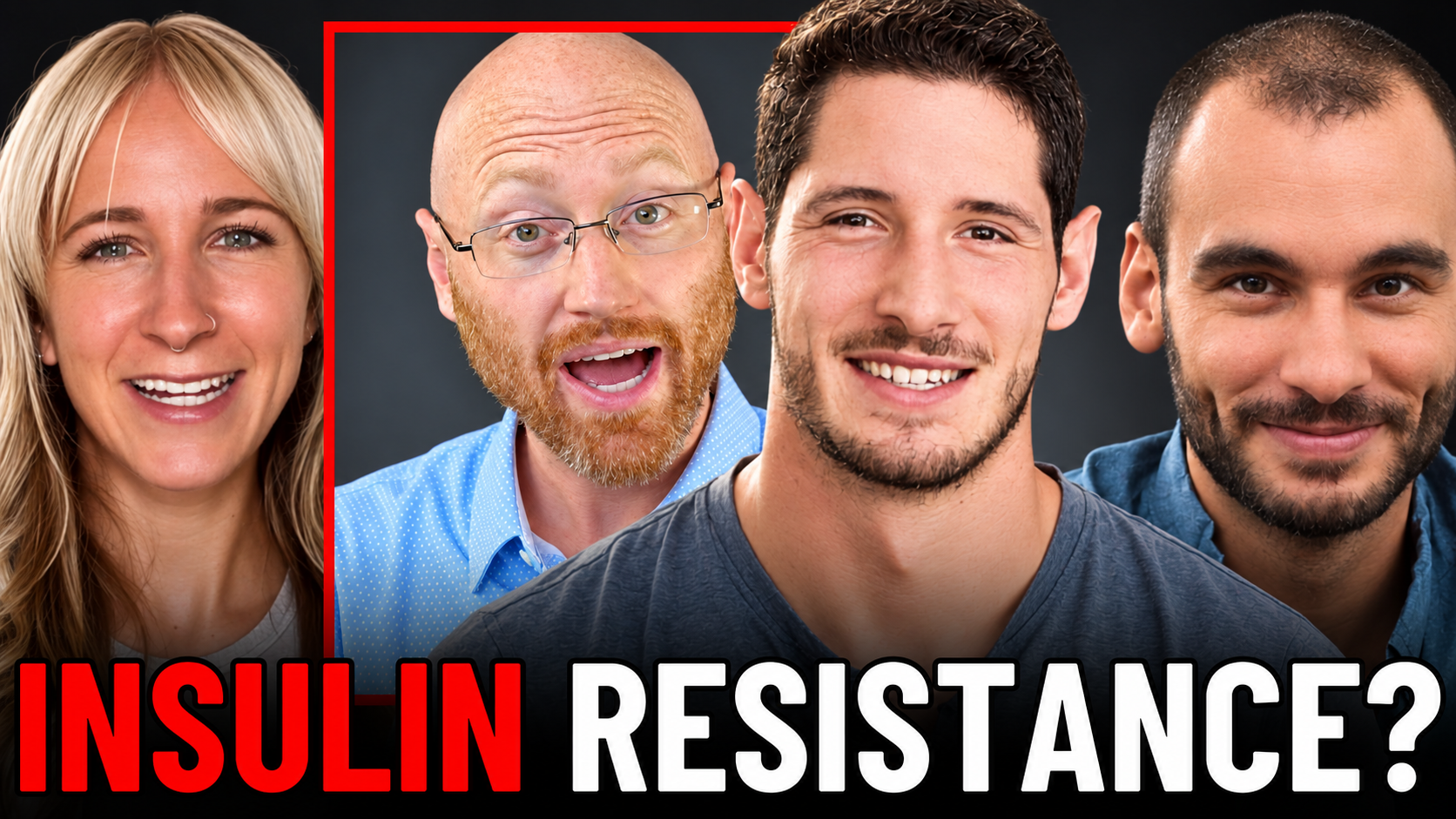
29 Sep 2026 BV #34: Avoiding Sugar Won’t Prevent Heart Disease
Listen to the podcast on Apple Podcasts | Google Podcasts | Spotify
In this episode we discuss:
0:00 – intro
2:17 – Anthony Jay suggests that sugar is a worse fuel than fat
11:33 – is insulin resistance the cause of arterial plaque and heart disease?
16:47 – does the heart become “addicted” to sugar in insulin resistance and cardiovascular disease?
24:38 – fat metabolism is worse for insulin resistance in the heart
34:25 – don’t feed babies sugar or carbohydrates? do carbs drive heart disease?
44:55 – what Anthony Jay gets wrong about statins and diabetes
52:17 – after years of low-carb, she reversed fatigue, brain fog, and hormonal problems using a bioenergetic approach
Mike Fave 0:00
Based on what he's saying here, I wouldn't even read his book. It would. I personally, I don't think it'd be worth the time to read it. For
Jay Feldman 0:05
the example to be baby food, which was like pureed peaches and applesauce, as if that's what's causing its resistance, is insane. And then to point to that as a driver for people's addiction to sugar, it's not a sugar addiction. It's a physiological need that's there from the get-go, again, that's why breast milk is made up of 40% sugar by calories.
Mike Fave 0:25
Just more claims that are made that aren't really supported, and if anything, it's if they're opposite. Like what he's claiming is is opposite of what the reality
Theresa Piela 0:35
is. Welcome to the Bioenergetic View. I'm your host Teresa Piella, joined as always by Jay Feldman and Mike Fave, today we'll be talking about what we think of Anthony Jay's idea that sugar and insulin resistance cause heart disease, whether eating high carb or high sugar diets causes insulin resistance, whether the heart really prefers fat as a fuel over glucose, and closing out the show with some questions, I hope, and always a success story. So let's get started from around the internet. So we've got some interesting clips, as always, with Dr. AJ and Jay. You originally brought him to our attention with his his new book that he's been touring, Sugar Beat. Yeah, this
Jay Feldman 1:25
was this was sent to us some of his content because of his new book. Yeah,
Theresa Piela 1:29
yeah, okay. Sugar Beet: How Sugar, Not Cholesterol, Destroys Your Arteries, and the New Science of Reversing Black. And then we've got Ben Pikolski, and he still has, he still has to release the podcast he did with you guys. But we'll just wait on that and see if he ever does. Yeah. Anything, Jay? Anything to add about these clips before we dive into them? I
Jay Feldman 1:56
don't think so. This was yeah, Doctor Anthony J on Ben Pikolski's podcast talking about his new book, and we'll hear about it.
Theresa Piela 2:04
Okay, so yeah, they're talking about how plaque is caused by insulin resistance, sugar results in less ATP, and burns fast. All right, you guys ready?
Speaker 1 2:17
Yeah. So what what are the things that are actually causing? Because I think there's a list of them that are actually causing damage to the arterial wall, the deterioration, the glycohelix. Like, what do we know is actually causing that?
Speaker 2 2:26
Yeah. So I think, and again, this is in my book. I think it's pretty clear, you know. But let me explain it from the beginning, right? And we can talk about amplifiers in a second. But I think the root cause of plaque in people's arteries, almost all plaque. It comes down to insulin resistance, and here's how it works. So first of all, we have two energy sources. Humans have two energy sources. We either burn sugar or you burn fats. They call it glucose, but it's sugar. It's sugar and fats. Now, if you put those two together, sugar and fats, and you've got muscle cells and brain cells and liver cells. Your body prefers to burn sugar first. It'll burn the sugar first because it's fast-acting energy. It's kind of like if you're if you have a campfire and you're burning logs, and then you put gasoline on the campfire. It's like yeah, you're going to get a big flare. You're going to burn the gasoline off. Sugar is faster-acting energy. You can burn sugar in a cell outside of your mitochondria, most people don't realize that you can you can use your mitochondria and burn it inside too, but you can also do it outside. Fats you have to use your mitochondria. You can't burn fats in the cytosol. You have to bring them into the cell and then into the mitochondria, and then you get over 100 ATPs. Sugar, you only get like 30 ATPs, and sometimes you only get like five or six. Depends how you're burning them and how much you're using the mitochondria. But the point is, sugar burns fast. Most cells will burn that fast energy. I'm not saying it's better; it's faster, but it's it's preference, right? You can Google it. Google what is the brain's preferred energy source. It's going to say Sugar.
Theresa Piela 4:02
Okay, so Jay, it seems like we all need to just shift over to ketosis and not be burning through our fuel sources so quickly. Is that what I'm hearing?
Jay Feldman 4:17
Yeah, I think that's what we're getting toward, and it becomes clear, especially in the next clip. But there were some just initial things here that I think, like initial kind of points he's making. The first is that the root cause of plaque accumulation is insulin resistance, and then we're starting to get into this idea that that's being driven by using sugar as a fuel instead of fat as a fuel, and and he's not being clear on why that drives the state, but we'll get to that. Like he he touches on that in a little bit, but he does make a couple of comments here about why using sugar as a fuel might not be as good. You know, he mentioned the difference in ATP production between the two. But he also did mention, importantly, that carbohydrates and sugars are a preferred fuel source, especially in the brain. So, so that's notable, and I think that's worth circling back to as well. But we're just kind of getting like kind of setting the scene here of his view of what's going on in the physiology that's that's causing plaque accumulation and and cardiovascular disease, I do think there's at least a couple of small points that are worth touching on. One is he was talking about how most people don't know that you can burn glucose outside of the mitochondria, which that's glycolysis or anaerobic glycolysis, which is normally something that people will think about in the context of like really intense exercise, like sprints, where you're relying a lot on this glycolytic system where oxygen isn't involved, and you're just converting glucose to lactate. And then he mentioned that that was the one that most people weren't aware aware of, and I thought that that was interesting because most people seem to think of that as glucose metabolism, and I think more people are unaware, especially in the low carb space, that the mitochondria can use glucose extremely efficiently and produce a lot of ATP and very little reactive oxygen species in the process. And that's why the brain utilizes large amounts of glucose and doesn't use any fatty acids. It's because glucose can be used extremely efficiently in the mitochondria, produces a lot of ATP, and the ATP to reactive oxygen species ratio, which that's what drives oxidative stress, is much higher with carbohydrates versus fats. So a couple notable things there. The other thing I wanted to mention is, and we we've mentioned this a few times because it's one of those kind of like really weak arguments put forth about burning fat versus carbs. But people will talk about how with one molecule of fat you get more ATP, a little bit over 100, compared to one molecule of glucose, where you get a little bit over 30 ATP. And because you mentioned it, it's at least worth touching on the fact that this is looking at molecule for molecule, which isn't particularly relevant because the number of molecules available isn't the limiting factor when it comes to ATP production. The limiting factor is how well we can use that fuel because in the time that it takes to run one molecule of fat through mitochondrial respiration, you can run multiple molecules of glucose. So this isn't you're not limited by burning one molecule at the same pace of glucose versus fats, or fats versus glucose. So what they actually find is, in terms of which can produce ATP faster through mitochondrial respiration, very efficiently, glucose is very clearly the winner there. Again, that's why our brain uses glucose and not fats for fuel. So that's just a couple of kind of starting places here. We'll definitely be touching a lot more on whether it's better or worse to be burning carbs versus fats, as he talks about it more, and what's going on in the heart, and what's going on in cardiovascular disease, but yeah, I mean that's at least a couple of starting points.
Theresa Piela 8:07
Thank you. Yeah, and I'm really glad you emphasized that again because I think that's where the nuance gets lost, and people just kind of sweep through it. They hear these claims, and then you know, sugar is the demon that we all need to avoid.
Jay Feldman 8:19
When it comes to creating a diet for optimal health. There's a lot of conflicting information out there, and that's why I've created the Energy Balance Food Guide to help you determine exactly what to eat to optimally support your metabolism and help you lose weight, improve your digestion, get amazing sleep, boost your energy, and so much more. The Energy Balance Food Guide is a one-page infographic that organizes foods on a spectrum based on how effectively they support your metabolism, and it also has a separate spectrum that adjusts the scale for you in the case that you're dealing with various digestive symptoms. The food guide makes it extremely easy to get started with a bioenergetic approach to optimizing your health. So head over to jfeldmanwellness.com/guide to download your free energy balance food guide,
Theresa Piela 9:02
Mike. What were your initial reactions to our the setup of his premise here?
Mike Fave 9:08
So I'd say there's two major things that I would want to address. One, Jay, you already touched on, and I just wanted to emphasize basically what you're saying is that in a given unit of time, because of the rate of which fats and carbohydrates can be oxidized, carbohydrate will produce more ATP. Which that's like the most important thing is like how much ATP is being produced in a given unit of time, not how much can be produced in general. And then also when you look at carb, like a glucose molecule versus a fatty acid, you also have a very different structure in terms of the number of carbons and stuff like this. It's not like you're comparing apples to apples. You're comparing apples to oranges in this circumstance. That's another thing. So like, it's not even to say that that's even that important. That oh, fats make more ATP. This is like a a tangential argument that gets possessed. To try to justify fats as the better fuel source, and then it's like it's not this argument doesn't make sense when you actually look at it specifically when you compare the two molecules and you compare the rate of oxidation or rate of ATP production per unit time. So it's not even relevant, and then on top of that, it it's not even supported. So that's the first thing. So it just will cut that out. Now the other thing that's going to be important when we talk about because he gets into the heart, which this is weird in this podcast because they're talking about atherosclerosis and plaque formation, but then they're also talking about the the energy production in the cardiac muscle, which those are two different things, and there's two different pathologies. You can have plaque formation without cardiomyopathy or heart failure, and then he's getting into cardiomyopathy and heart failure dynamics later on. But irrespective of that, if we look at if we look at cardiomyopathy and heart failure, then there's there's different ways that you can get to those. Fundamentally, in all those circumstances, in any of those circumstances, relying heavily on fatty acid oxidation and pushing heavily on fatty acid oxidation is a net negative for the heart because not only of the the ATP and ROS ratio that Jay mentioned, but also because of the amount of oxygen that's required in a in a heart that's already likely either ischemic or struggling in terms of oxygen demand. So that's another thing I want to set up to hear in terms of the differences between fat oxidation, carb oxidation in a failing heart. Now, the last piece that, which was my first piece, but I switched it just tailing tailing off Jay. The initial statement where he talks about that plaque formation is due to insulin resistance, or all plaque formation is due to insulin resistance is not true. So you can have insulin resistance drive plaque formation, but you can have a variety of other factors that drives plaque formation that isn't directly triggered by insulin resistance. And I've seen this in clients where their insulin values are fine, but they have a plaque burden. You can I can look at their their home IR values. I can look at their triglyceride to HDL ratios, and then I can see their CAC score, and I can see a heavy plaque burden without necessarily having current insulin resistance. You could argue maybe there was some in the past, but for some of these people, they have a history of not having significant insulin resistance. So there's the other things that you can look at here. You have things like nutrient deficiencies in general. You have chronic infections. You have people who are smoking. You have people who have endotoxemia. You have autoimmune processes that can trigger significant vascular inflammation and dysfunction. You have environmental toxins and exposures. You have hypothyroidism as a big one, and which that can that can go with insulin resistance. But you can also have somebody who is hypothyroid, and I have clients like this right now who don't show overt insulin resistance, yet their lipid profile, plaque numbers, and potentially vascular function are not optimal. And you also have people who have genetically driven plaque formation.
These are people with exceptionally high lipoprotein little A values, or they have alterations in their their lipid profile, and other factors go in because it's not only lipids by itself. There's usually multiple factors, but in general, their susceptibility will be higher, and they may not be insulin resistant. They could have a conglomeration of other things that drive plaque formation. So, trying to get this everything is down to insulin resistance is catch-all theory, and and then like it's not cholesterol at all. It's just insulin resistance is fundamentally flawed from the beginning, especially if you go through the research, you start looking into cardiovascular disease directly, and then the cardiomyopathy, heart failure piece that we're gonna. But I don't think he specifically calls it cardiomyopathy or heart failure. He talks about metabolism in the heart. This conversation is again like that's a separate argument to some extent from plaque formation, the plaque doesn't have to necessarily form. You can have like significant plaque formation in your coronary vessels and amongst vessels throughout the body with the cardiac muscle working just fine. So these are these are important distinctions that need to be made. And I mean the overarching picture when I look at his argumentation, it's just imprecise, and he makes a bunch of claims that don't necessarily support the perspective, and then some of them are tangential, and then he like kind of groups everything together and has this like catch-all theory for everything, and it doesn't actually work out that way in reality, and like the research doesn't support it, and even my experience working with clients doesn't support some large proportion of these arguments.
Theresa Piela 14:21
Yeah, I mean to get the the to make a sweeping claim and have the sweeping claim be incomplete, and then to build a whole narrative around it, I think that's kind of the theme that we keep noticing in these health influencer podcasters. Whatever you, I mean, I know he's got his PhD, and I respect that. And yeah, there are some obvious holes.
Jay Feldman 14:46
Yeah, and and and just I do want to tack onto what you had mentioned, Mike, as far as the root cause of plaque being insulin resistance. I think, as you were noting, that is, I think, an oversimplification and. Also, not at all the full picture. That being said, I do appreciate that we're talking about the role of energy production here, metabolic function, mitochondrial function in cardiovascular disease. I do agree that insulin resistance plays an important role, and I'm sure you do too, Mike. And a lot of the factors that you were talking about that contribute to cardiovascular disease and plaque formation, like endotoxemia and oxidative stress, which you know I'm sure we'll come back to, and hypothyroidism things like that do contribute to both pathologies. And then I'm sure all of you know all of that does compound, right? Those things can cause and drive insulin resistance. Those things can cause and drive plaque formation, and there's also a number of reasons why insulin resistance can also drive plaque formation. So it's an important thing to be talking about here. It would be great if we could do it without the broad sweeping statements and the kind of weakly formed arguments behind them, and that becomes, I think, a lot more clear with these next clips because we really get into some of those tangential arguments and assumptions that you were alluding to, Mike. But I did just want to say I do appreciate that we're at least having conversation about this aspect and its role in cardiovascular disease, and I do agree with the sentiment that I think he's coming from, which is most doctors when they're talking about cardiovascular disease and plaque buildup. They're only focused on lipid values in a way that isn't even in alignment with the physiology, and they're totally ignoring huge other factors. So I do think it's an important part of the conversation, even though we have disagreements within it.
Theresa Piela 16:37
Yeah. In these next clips, he's talking more about yeah how how your heart prefers to burn fats. If it burns too much sugar, it's dysfunctional. Let's listen.
Speaker 2 16:48
Your heart, and again, people can Google this. It's super well established. Your heart prefers to burn fats, which is kind of wild. If you give it a choice, it'll not burn the sugar. It will burn the fats. Now here's the problem: it can burn sugar if you just hammer, hammer, hammer, hammer. If you keep eating sugar all the time and carbs all the time, it will start to transition over, and you'll start becoming a sugar burner in your heart, which is super dysfunctional, but it does happen. How does it happen? Baby food starts with the fricking baby food! You go back to that. It's not even protein in that stuff. It's just sugar, sugar, carbs. It's parade applesauce. It's parade peaches. It's-I mean, I watch these parents, and it's like embarrassing to see what they're feeding their kids, and then they transition them to like five meals a day. But the point is, right? Like going back to people's addiction to sugar, your heart gets addicted. Your heart starts to burn sugar, and it starts to exclusively, like predominantly burn glucose, which it's not really supposed to do, but it will do that if you keep eating it all the time.
Theresa Piela 17:51
So this takes us back to the sugar addiction conversation and how it is dysfunctional for our bodies to be using that quick, rapid fuel source. Mike, tell us your thoughts here.
Mike Fave 18:08
So, the premise in general that the heart becomes a sugar burner, and that's what makes it dysfunctional, is like that's the first thing that I would address, and it's not actually the the full picture of what's going on. And also, this is this is semi separate from a plaque argument, because the plaque formation in the blood vessels doesn't always necessarily contribute to the a cardiac dysfunction, and the end state to this the the cardiac dysfunction is something like a diabetic cardiomyopathy, which is the end state of progressive insulin resistance and diabetes on the heart. But there's also cardiac dysfunction that's driven by pressure overload, so hypertension. And they actually are two different two different pathologies to some extent. I mean, oftentimes they're coupled because people who are typically diabetic also tend to have high blood pressure, but in general, if you're looking at these two separate pathologies, in one in the pathology, what he's talking about here, where the heart starts to utilize glucose heavily, that pathology is a high pressure pathology. That's a a pathology where the heart has an overload of of pressure on it from a hypertension from a high blood pressure, and it causes cardiac hypertrophy. So the size of the heart muscle increases, and then also the what happens is the utilization of glucose becomes uncoupled from glycolysis to oxidative phosphorylation or the mitochondrial conversion of the pyruvate that comes out of glycolysis into ATP. So what winds up happening is you just get a ton of glycolysis inside the hypertrophied heart, and in that circumstance, it's not that you're getting too much sugar to the heart; it's that the heart muscle itself is not oxidizing fuel substrate effectively, and that that problem is not necessarily triggered by just you just. Eating too much sugar over time, you have a hypertensive process, which can be triggered by vascular dysfunction through diabetes. Yes, but can be triggered by a variety of other factors, including issues in the RAS system, renin angiotensin aldosterone system, where you have this hypertensive process going on, and then that can lead to the pressure on the heart, and then that can lead to once the heart becomes hypertrophied and the cardiomyocytes are under pressure, you have this issue with their mitochondrial function, where they start mainly running glucose through glycolysis. And in some of the research, when they when they are running glucose through glycolysis and they block it, you actually have a worse impact on the heart because the heart is not able to make energy effectively through the mitochondria, so it has to use these backup pathways. Now, this is not great. This is not ideal. This is a problem. But to say that, well, you see in this this heart failure state that you know there's a lot of glucose utilization, so therefore, like the then back it all the way up to sugar caused that is a massive leap that I wouldn't say is necessarily supported. So then, that's the high pressure circumstance. But if we talk about a diabetic cardiomyopathy, which is heart damage due to diabetes, that's the complete opposite. The problem in diabetic cardiomyopathy is that the the heart cannot use glucose effectively at all. It's known that in this circumstance that the heart is struggling to use glucose, and some of the therapies that they provide for diabetic cardiomyopathy and heart failure is blocking fatty acid oxidation with a variety of different drugs and enforcing carb oxidation with something called dichloroacetic acid, which is supposed to increase pyridio dehydrogenase activity and bring glucose into the mitochondria. So it's like his pathology that he's describing and saying that oh glucose is just driving this is not correct, especially in the context of a diabetic cardiomyopathy, which is the end state of insulin resistance. So this is like it's just like completely opposite it. And then furthermore, to try to argue that you would want to have an increase in fatty acid oxidation in this state in this this this pathology makes it worse. That would make that that would make the heart function arguably worse because what winds up happening in in a cardiac a diabetic cardiomyopathy is the fat is already overloaded with lipids. The fat already has a high ectopic deposition or high. What was that? The
Jay Feldman 22:21
heart. You were saying the fat is overloaded with lipids. You mean the
Mike Fave 22:24
heart is overloaded with lipids? Yeah. So the heart, you have ectopic deposition of lipids present in the heart, and the heart is not oxidizing those lipids effectively. So you get a bunch of lipotoxic intermediates, including the diglycerol ceramides and then acyl carnitines, which block insulin signaling. So you have mitochondrial dysfunction, fatty acid overload inside the heart, and then you you're not you're also not using glucose well in the cardiac the diabetic cardiomyopathy. You're kind of stuck with fatty acids. Trying to push that is antithetical to solving the problem, and actually could make the problem significantly worse. And it's in these states again, like the glucose is not the this you're not you're seeing a less oxidation and utilization of glucose in this state. So it's weird. I don't understand. I don't know where he's getting the idea that the more glucose oxidation in the heart just from eating more sugar is what's driving this this this dysfunction inside the heart muscle. This that's not the case. You have there's there's a direct mitochondrial dysfunction, and in the cardiac diet, the the diabetic cardiomyopathy, there's already a lipotoxicity present. And in like, could hyperglycemia make this situation worse? Yes, but it's not because the glucose itself is inherently toxic. The problem is that the heart cannot use the substrate effectively, so the glucose, the you have this high concentration of glucose in the blood. It moves into the cardiac tissue due to this high concentration in general, high circulating insulin. And then what winds up happening is there's nowhere for it to go, so it gets shunted down a variety of different pathways, including the polyol pathway, and then through and creates advanced glycation end products, and then that damages the heart. But that's not glucose being bad. That's a broken heart that cannot use the substrate well, and it's it the substrate is being forced into the system because of dysfunction in general. Usually, in a diabetic cardiomyopathy, there's there's insulin resistance across the whole body. There's ectopic fat deposition in the liver, the pancreas, the muscle tissue, and then you have a high visceral adipose tissue, so you just have a high amount of circulating free fatty acids because none of these tissues are taking up and using these fuel sources well because they're already overloaded with lipids present in them. So it's a very weird dynamic. And then the last piece here, and this goes to what we were talking about before the preface that I was saying before, and Jay, what you discussed, running fatty acids in this state, is a net negative because the fatty acids require way more oxygen for to produce ATP than carbohydrates do. The heart is already struggling. If you have diabetic cardiomyopathy, you likely already have microvascular complications, so there may already be some degree of ischemia, a lack of oxygen and blood flow to the heart tissue. And then now you're increasing the oxygen demand with with a increasing fatty acid oxidation on top of increasing reactive oxygen stress. So this is like a I don't know where this perspective is coming from. When you go through the research on cardiomyopathy and heart failure, it it's like saying the opposite of this. It's not saying it's not saying any of this. Oh yeah, the heart is oxidizing too much glucose, and that's why it's in dysfunction. You could say the heart is running glycolysis in certain states, but again, like that wasn't triggered by because you had too much carbohydrate. That is triggered because of dysfunction inside the cardiac muscle.
Theresa Piela 25:34
So it wasn't the baby food.
Mike Fave 25:36
No, I don't even know where this baby food idea came from. It's just like maybe the arguments that it started like all the way back when you're young, but yeah, I don't know what the, I don't know where he's getting that. I, I have to be fair, I haven't like gone through and read his book, so this is based on what his statements are here. But I also based on what he's saying here, I wouldn't even read his book. It would, I personally, I don't think it'd be worth the time to read it because if this book is what he's saying is what he's written, I'd rather just go to primary sources and PubMed and read what the researchers are actually saying because you know that's actually let's argue more correct, especially given this take.
Theresa Piela 26:16
Yeah, I mean it's it's again pulling out these common themes. It's it's this idea of we take a really stress state and then we stress it out even more, thinking that it will provide a fix when in fact we're looking in the wrong we're we're trying to to shift something instead of actually supporting and helping the heart work better and burn fuel better. Jay, how would you how would you go about actually supporting a heart to function better instead of removing its preferred fuel source?
Jay Feldman 26:52
Well, as Mike was saying, and in direct contradiction with what we're hearing here from Anthony J, blocking fat metabolism is actually something that improves the state of the heart in like diabetic cardiomyopathy and a number of these other circumstances. So, if any, if you were going to say it's better to favor one fuel over the other, you would want to favor the glucose metabolism over the fat metabolism. But that's even still so many layers separated. Like we're not saying the primary cause of atherosclerosis or diabetic cardiomyopathy for most people is that they, you know, didn't eat carbs and ate too much fat. Like we're not saying that either. It's a severe oversimplification of what's actually going on physiologically, which is the the main issue we have here. It's it's like there's an an important role of fuel metabolism, but a it's not what he's saying at all, and b it's not the whole picture. It's a step kind of separated because underlying the state is mitochondrial dysfunction, inability to oxidize fuels effectively, and when that happens, the body shifts toward using more fat because the ability to oxidize glucose is more sensitive. So to zoom out there, I think the primary underlying issue that he hasn't said specifically here in these clips, but there's this conflation of insulin resistance being caused by carb intake and carbon metabolism. I think that's where a lot of the like root of the disagreement is, and we're not disagreeing that insulin resistance is a problem. Like that is a problem that does contribute here, but it's not due to increased carbon take, and it doesn't involve using more carbohydrates. When you're in the insulin resistant state, you're using less carbohydrates and more fat, and when you block the fat metabolism, it actually improves the insulin resistance, so that's I think where a lot of the key disagreement is. But I do think it's worth coming back to just some of the claims made here because they're really outlandish. Like when it comes to heart fuel metabolism, Mike, you touched on a number of things, but even just zooming out to some of his basic statements, he he made the comment that your heart prefers to burn fats, if it's given the choice, it will burn fats. But that's not actually true. The fuel distribution, like the fuel utilization of the heart, first off, it's normally quantified in a fasting state. And the heart's a muscle, and like all of our muscles, it's pretty metabolically flexible. It can efficiently use fats as a fuel, or it can efficiently use glucose as a fuel, and the muscle will generally shift based on what its demands are, and also what fuel is available. So, if you're fasted, you don't have you know carbohydrates, you haven't eaten carbohydrates in normally minimum 12 hours. You have started releasing a lot more fats from your fat stores, and all of your muscles shift toward utilizing more fat than they do carbohydrates, but if you eat a carbohydrate-containing meal that shifts, and they use you know the muscles, including the heart, use considerably less fat and much more glucose. So to say that if the heart is given the choice, it will burn fats isn't true because when you eat a carbohydrate-containing meal. You still have fat available. It will use way more carbs than it was prior, so that's the first thing to to mention here. And then to add on top of that, this idea that if it's burning more carbs, then that's where the problem comes in is also not supported at all. And a couple of like clear examples of that, we can look at populations that eat very high carb, low fat diets, and in that state, their hearts are going to be using more carbohydrates than somebody you know, average population that's eating far less carbohydrates, or someone who's on a low carb diet, and yet they don't have cardiovascular disease. We've got tons of examples of this. We have the Taro Humara Indians of Mexico, where they get 75 to 80% of their calories from carbohydrates. We have the Tukisenta of Papua New Guinea, who have like a 90% carbohydrate diet. The Catavins have a 70% carbohydrate diet, and there are no signs of cardiovascular disease or very, very little in these populations.
They don't even have high blood pressure, like they're overwhelmingly healthy in terms of their hearts, and on top of that, they're also incredibly insulin sensitive. They don't have diabetes. They're like some of the most insulin sensitive populations that we know of. So this idea that utilizing more carbohydrates drives in some resistance obviously isn't the case, and the idea that a heart that's using more carbohydrates is going to become dysfunctional is also not the case, so that's a really important piece I think to touch on here, and I do just want to tack on a little bit to what you were talking about, Mike, which you know is coming back to what the heart is actually doing in these states because it's really clear, like it's really clear that in these dysfunctional states, the heart's using more fat as opposed to glucose. It's using less glucose, and when you block the fat metabolism, it improves the state. So I'm going to read a couple of quotes here. We try to avoid this on you know bioenergetic view, but I think it's just important because of you know somebody who's I mean, apparently written a book talking about this, but also is on all the podcasts right now talking about this, and it's very blatantly incorrect. So, just two quotes here I want to read. First one is from a paper titled "Metabolic Abnormalities of the Heart in Type Two Diabetes, and they say type two diabetes mellitus escalates the risk of heart failure partly via its ability to induce a cardiomyopathic state that's independent of coronary artery disease and hypertension, aberrations in cardiac substrate metabolism and energetics are thought thought to be key drivers. These aberrations include excessive fatty acid utilization and storage, suppressed glucose oxidation, and impaired mitochondrial oxidative phosphorylation, which is what you generally see an insulin resistance everywhere. You see reduced glucose metabolism. You see impaired mitochondrial function, and you see a shift toward burning more fats. And if you switch that metabolic state, it actually improves the entire state of the insulin resistance. And that's also touched on in this other paper titled "Mitochondrial Fatty Acid Oxidation Alterations in Heart Failure, Ischemic Heart Disease, and diabetic cardiomyopathy, and it states in many forms of heart disease, including heart failure, ischemic heart disease, and diabetic cardiomyopathies, changes in cardiac mitochondrial energy metabolism contribute to contractile dysfunction and to a decrease in cardiac efficiency. Specific metabolic changes include a relative increase in cardiac fatty acid oxidation rates and an uncoupling of glycolysis from glucose oxidation, which you were touching on, Mike. They go on to state in diabetes, the ratio of cardiac fatty acid oxidation to glucose oxidation also increases, although primarily due to an increase in fatty acid oxidation and an inhibition of glucose oxidation. And then the part at the end here is also really worth highlighting, where they say recent evidence suggests that therapeutically regulating cardiac energy metabolism by reducing fatty acid oxidation and/or increasing glucose oxidation can improve cardiac function of the ischemic heart, the failing heart, and diabetic cardiomyopathies. So, if we were to summarize this, it would be in this cardiac dysfunction. It's burning sugar worse, and it's burning more fat. And if you encourage its ability to burn sugar better and reduce its capacity for burning fat or the amount of fat that it's burning, it improves the state, which is the exact opposite of what we're hearing here, so pretty surprising to hear these kinds of comments being made. The last thing I wanted to touch on is coming back. This
Theresa Piela 34:28
is great. The
Jay Feldman 34:30
baby food comment, which you were bringing up again, Teresa. I mean, it was such like a. I mean, you, Mike, Mike, you brought this up too, where it's like this kind of tangential, offhand, like kind of weird thing to throw in here. Which I think what he was getting at is everyone is insulin resistant because we're eating sugar from a young age and eating five meals a day, and those are the things that cause insulin resistance. Like that was kind of the idea, but to start like to for the example to be baby food, which was like pureed peaches and applesauce, as if that's what's causing insulin resistance, isn't. It's like don't feed your baby sugar. Don't you know? Don't acknowledge the fact that breast milk is 40% sugar by calories. Like forget that. Just don't feed your baby any form of sugar, especially in the case of fruit. Like don't feed them fruit. Instead, you know they should be avoiding sugar. Like it's it's insane. And then to point to that as a driver for people's addiction to sugar, like it's not a sugar addiction; it's a physiological need that's there from the get-go. Again, that's why breast milk is made up of 40% sugar by calories. It's pretty important. And then to have this advice that I mean, the the things that people are going to be taking away from this are I shouldn't be feeding my babies any carbohydrates and any fruits, and in general, I need to be minimizing those things, and I think that's, I mean, really concerning. You know, it's really unfortunate that this is the narrative that's out there. Like this is what's being spread out there, and it's unfortunate that Ben Pikolski is not fact checking his guests very well. So, you know.
Mike Fave 36:03
He also the thing that they talk about too is like they they go on which is not in the clips that you guys posted, so I'd recommend people that they want to verify when saying like there's a little bit past this in the podcast, but they conflated it like yeah, my kids don't even know what Cheetos are, and it's like Cheetos have nothing to do with eating fruits and like having pureed peaches and bananas and whatever else for for your child, so that's a high fat, high carb mix, largely a very highly likely highly oxidized fats. So and a bunch of industrial additives. So like Cheetos and pureed peaches, they're not carbs. Like you don't group them together as carbs and then say like all carbs are bad. Again, this is it's like it's not an appropriate argument. There's lack of precision in that argument. It doesn't. It's not even there's there's no proof for that. So you can you can say yes, Cheetos causes problems long term, but to say it's the carbs would be incorrect. Now a couple things I wanted to highlight from what you're saying, because this is his point: is that you see in the you see in the in heart failure that there's an increase of glucose utilization, but and the the utilization is not oxidative phosphorylation; it's glycolysis, and it's in a specific type of heart failure that you see this, where you see like a hypertrophied heart, and it's actually what happens: the glucose cannot be used effectively. So into oxidative phosphorylation, go into the mitochondria and be converted into ATP. So you just waste the glucose to some extending glycolysis, or it moves into these other backup pathways: the polyol pathway, the pentose phosphate pathway, etc. Because it cannot be utilized effectively, and there's only so much that is going to run into ATP through through glycolysis, and then you get a bunch of negative mediators from there. But that's basically the the cardiomyocytes, the heart cells, trying to manage this dysfunction, being like, look, we still have carbohydrate coming in. We can't use this carbohydrate. So what are we going to do? We're gonna have it go and like kind of backfill into these other pathways. It's essentially if you dam a river and there's not enough room in the lake basin for the water to to hold, it starts backing up into all these different tributaries. So you're moving back into these other metabolic tributaries, and as you as you move into these other metabolic tributaries, you create some dysfunctional issues. But again, the fundamental problem is that the the flow of substrate in the form of glucose, and even in fatty acids, are are not being utilized very well in these these states. The flow of substrate is not being utilized effectively and being converted downstream to ATP. So you get this huge backlog and all these aberrations and these these overloaded tributaries in the other metabolic pathways, and that drives damage to the cardiomyocytes, the heart, et cetera, and worsens the pathology. So the the solution in the research that they discuss is trying to get the substrate to flow correctly into conversion to ATP, and especially glucose. Glucose is in in almost in most dysfunctional states, stress states, disease states, the you see a fundamental breakdown of glucose utilization. And by utilization here, we mean conversion of glucose to pyruvate through glycolysis to ATP inside the mitochondria, not just running it through glycolysis. This actual full conversion downstream through oxidative phosphorylation. So you see that process gets deranged in these states, and what winds up happening is you get fatty acid oxidation comes in, and that, and it's not even oftentimes it's not even complete fatty acid oxidation, or the the fatty acid oxidation is creating a variety of dysfunction as it's occurring that predominates, and then glucose gets shunted towards glycolysis. So that's the shift that occurs, and I think this is the confusion that we see when people say, "Oh yeah, the cells are just using glucose, and the glucose is the problem. It's like no, there's dysfunction, and it's moving through these backup pathways. The other thing here too is that in this, with this, with this pathology and with this state, the tissue. Are oh in in the diabetic state in general is overloaded with fatty acids. It's not neces. It's not a glucose toxicity.
It's a lipotoxicity. You can have a gluco lipotoxicity where when the cells aren't using substrate well because of lipotoxicity, and you expose them to glucose, it makes it worse. But and again, that's from the same pathways that I just discussed. But the fundamental starting state that drives insulin resistance directly. Some of the best mechanistic evidence we have is via lipotoxicity, via ectopic fat deposition in tissues that should not be holding fat, like your heart, like your liver, like your pancreas, and like your muscle tissue. You should not have a high proportion of fatty acids and especially certain fatty acid metabolites in these tissues, because it will directly impair insulin signaling sensitivity and glucose oxidation. So the solution is to clear that stuff out, to clear out the lipotoxicity. And in in some of the research and some of these studies aren't even done in like great ways overall for health, but they get people to lose significant amounts of weight and pull the body fat out of those tissues, and then you see a recovery of metabolic function, assuming pancreas and these other tissues having undergone significant damage over time. So that's the like this is the I think the fundamental thing to focus on instead of saying oh it's just glucose. the The goal is to say okay, there's mitochondrial dysfunction, metabolic dysfunction of the cell. How do I correct that? And then the last piece I wanted to mention here: the population that we, one of the populations with the lowest heart known heart disease on the planet, is the Jemani Native Americans in Bolivia, and they have CAC scores. Their men have CAC scores lower than Japanese women, which were the previous standard before that, and their diet is high carbohydrate intake. I think it's like 400 grams of carbs a day, and the carbohydrates are are things like taro and cassava, and or maybe not taro. So I think it's cassava, plantains, and then fruits that they forage in the in the forest, and then whatever game meats and stuff. It's not a vegan diet. They still eat protein and whatnot, and it's it's a lower fat intake overall, but it's very high carb intake, and they have like basically like minimal even in older ages coronary artery calcium scores. Like their plaque burden is some of the lowest that they've ever seen. So it's this argues against this idea. Oh, it's carb consumption and sugar consumption drives this process, and you're getting heart disease and and plaque formation from this. No, no, it's metabolic dysfunction is one major cause of cardiovascular disease, and it's not necessarily driven just by carb consumption. There's other things that are driving it. So yeah, that would be my my full perspective that I want to add.
Theresa Piela 42:40
I'd love to be able to. Well, this doesn't seem ethical, but to give them like a high fat keto snack diet and see what the heart disease rates would change to over time, just to see, just to. You could just
Mike Fave 42:54
look at the Maasai. You can look at the cardiac data that we have on the Maasai, which were I made a video about this comparing them because the Maasai held up as one of the groups that have some of like the better health, and they were like had very high dairy fat intake and stuff like this. But at least from the data we have, which is not comparable to the chimane, from the data we have, the Maasai's health outcomes are not great at all. Especially, and this is from like the 19th. These are not. This is not current data on the Maasai. This is data all the way back because you can't use current data because their diets have changed. So this is data from way back in the early 1900s, where you I think it was like 19 1940s, 1950s, and where you're seeing that there's these are people that are in rural parts of Africa. They're still consuming. They're largely still consuming, at least per the papers, their their regular diet and their cardiovascular outcomes in terms of plaque formation and stuff like this was not very not very good at all. Whereas with the chimane, we have CAC studies on them in in relatively recent times, even in old age, on a like an opposite diet in terms of macronutrient composition, and their cardiovascular outcomes are are are pretty pretty good overall. Both of them have parasitic disease burden, inflammation, stuff like this. But when you look at the cardiovascular outcome, it's kind of night and day between them. At least based on the research we have, we don't have a comparable study doing CACs in the 1950s on the on the Maasai. So there's a take that with a grain of salt. I would say. Okay,
Theresa Piela 44:22
thank you for that, Jay. Anything to add before we shift to this kind of a pivot for for the last clip? But there was a lot in these last two, so I want to make sure if there's anything else lingering.
Jay Feldman 44:36
Yeah, I don't have anything to add, and yes, a little bit of a different comment here on this last one, but still along the same idea of how reducing your ability to burn fats is the problem, and that causes diabetes. So that you know that's why it was important to include it because it just it's continuing on that same thought process.
Theresa Piela 44:53
Okay, here we go.
Speaker 1 44:56
You zeroed in on rapata and Lafendra as people. CSK9 inhibitors. Would you put those as a class above statins or azetamide as as far as utility and negative lower negative side effects? I
Speaker 2 45:09
think so. Although you still get the diabetes, like you can go to rapatha.com. Sometimes I do it on podcasts like this, and I show people like go to their own website and look up the common side effects, not the rare ones, the common. It says diabetes right on there. It's like one of the top ones. Why? Because if you shut off your ability to transport fats, you gotta burn sugar. Your metabolism starts to become more and more and more dependent on sugar, and it might take five years. Like the the study that showed statins increase diabetes 46% That was a 5.9 year study.
Theresa Piela 45:43
So, Jay, with with the claim that statins are increasing this dysfunction, what is and what would you say is actually happening there? What is the root cause there? Yeah,
Jay Feldman 45:56
I think that's the right question to ask because he's making it sound as though it's because they reduce fat transport and therefore fat utilization, and then that causes insulin resistance. But statins don't do that. Statins interfere with cholesterol production, which is not a good thing. Like we're not saying this as people who are saying, "Yeah, you know, everyone should be on statins. I think there are major, major negative effects and very concerning, and not at all getting at the root of the issue and all of that, but then cause issues because of their interference with cholesterol production itself. And that does a couple of things. One, it reduces our capacity for producing CoQ 10, which is vital for mitochondrial function, vital for the electron transport chain. Without it, we can't produce energy efficiently in the mitochondria. And on top of that, cholesterol itself is a vital nutrient for a number of purposes. One of them being steroid hormone production, which has a huge impact on insulin sensitivity as well. So it's interference with those pathways that contribute to the insulin resistance. It's not that statins are causing your body to stop burning fat and start burning carbohydrates. And we've already talked about this, especially in the context of the heart. But that's not what's happening in its own resistance. In its own resistance, you're seeing mitochondrial dysfunction and a shift toward more glycolysis and more fatty acid oxidation, rather than the opposite. So yeah, that's the that was like one of the important points. And then when it comes to the PCSK9 inhibitors, which lower cholesterol through different mechanisms than statins, they also don't block fat transport and metabolism. If anything, the suggestion mechanistically would be that they increase fat uptake in the tissues. So this isn't again he's he's making it sound as though these are like fat metabolism inhibitors, except the funny thing is we know that fat metabolism inhibitors increase insulin sensitivity and reverse insulin resistance. So if you look at the actual compounds that do that, it does the opposite of what he's saying. But yeah, with the PCSK9 inhibitors, there's the like it's not fully elucidated as far as how they could cause insulin resistance, but it seems like one of the factors could be like this excess lipid and specifically cholesterol drop off inside the pancreatic beta cells, and the excess amount of cholesterol in there interfering with insulin signaling. Again, that not being because cholesterol is bad. That's not what we're saying, but it being very far from what he's talking about, where these drugs cause diabetes because they reduce your body's ability to burn fat, which goes along with all of the other you know earlier points we heard from him.
Theresa Piela 48:34
Mike, what are your thoughts here?
Mike Fave 48:37
Yeah, I mean, I basically agree with Jay. I think this is just a bad take because these these medications are not impairing your ability to distribute and uptake fatty acids. They're just they're lowering cholesterol, and the PCS canine inhibitor has less of a diabetes signal than the statins, like significantly less so. It's even like you can see some change in blood sugar, but new and new induction of diabetes isn't like a significant risk for a path, which is one of the reasons why people are preferring to use rapatha over something like a statin. And the statin's cause of diabetes is through direct mitochondrial dysfunction. There's multiple pathways in which it it leads to increased reactive oxygen species stress by impairing the formation of selenium proteins, which are some of the glutathione based proteins, some of the thyroid-based proteins that activate the the thyroid hormones and help create our antioxidants, recycle our antioxidants, top of impairing. So it it when you block the when the the statins block the mevalonate pathway, they the whole bunch of mediators they're called prenyl intermediates that flow downstream in that pathway, and this is the pathway that's used to make cholesterol. Those intermediates are needed for a variety of proteins and enzymes in mitochondrial function, including coQ10. So you basically just nuke your ability to produce the machinery you need inside your cells to utilize fuels effectively, and then this drives the mitochondrial dysfunction and increases progressively or over time. The risk of diabetes with using the medications. So it's not because they're lowering cholesterol and and lipoproteins in general that lead to the this impact on diabetes. It's because the other out off target effects of the statin and blocking the production of these other things is what drives the diabetic process. So again, it's like that. It's like a you need to be precise in what you're talking about in terms of what causes what. You had to say, oh yeah, well, you know, statins lower lipoproteins and they also cause diabetes, so it's probably just because they decrease fat oxidation. It's like a that's not the case, and then b decreasing fat oxidation would increase insulin sensitivity directly, and that's known in the research. You can flood somebody's system with fatty acids via IV, and you will make them acutely insulin resistant. Even people who are completely insulin sensitive. So fatty acid oxidation is at odds with insulin sensitivity, and then the statins are not working through that mechanism at all. So like again, just more claims that are made that aren't really supported, and if anything, it's if they're opposite, like what he's claiming is is opposite of what the reality is, which is, I mean, it is it is concerning because I'm wondering where he's getting some of the ideas. I couldn't I couldn't find I couldn't find in the PubMed or or in the research where where he's saying like oh yeah like there's actually this specific case where you know too much glucose oxidation is what's is what's damaging the heart, or sands are causing diabetes because it lowers the amount of fat transport, or something like this.
Theresa Piela 51:29
Yeah, I think we need to take everything he says and just flip it. Read the book upside down. No, don't do that, Jay. Anything else to add here?
Jay Feldman 51:37
I mean, it reminded me. I wanted to come back to the comment I made earlier about Ben Pikolski not doing a good job of fact checking him. That was an allusion to the fact that Mike and I were on. We recorded an episode with Ben Pikolski years back, and he never released it seemingly because he didn't like or agree with things that we were talking about. So it was kind of tongue in cheek, you know, commentating on the fact that he is having a guest on who maybe is saying things that he likes more, even though it's not necessarily factual. So, just wanted to add some context for that in case anyone was wondering.
Theresa Piela 52:14
Thank you for that. Okay, let's close out the show with a success story and when it's a little long, so give me give me a moment. Okay, Rachel Bonice, 1851. She said, after listening to you, Mike, Teresa, Georgie, and the strong sisters Sarah and Ashley on several podcasts, I flipped everything I had been doing for many years on its ugly head. I was feeling low. Actually, bonked a year ago after a long history of clean, low-carb eating, working out a lot, shortchanging my sleep, and most recently, 18 months on physiologic dosing of bioidentical hormonal replacement therapy, estradiol, progesterone, testosterone. I decided to take HRT as a prophylactic measure while still in late perimenopause at 49 years old, even though she was asymptomatic. Almost immediately after starting HRT, I gained weight, lost all motivation for my workouts, and felt like I was walking through molasses on my daily hikes. Gosh, I think we can all relate to that feeling at some point in our low carb journey. Then she says it wasn't adding up. I was supposed to be thriving on HRT, right? Wrong. It wasn't until after reluctantly listening and learning a different perspective on what perimenopause and menopause and the symptoms associated with this time of life was actually reflecting, did it all start making sense to me about how I was feeling? I learned that my body was still making estrogen during this time of ovarian estrogen fluctuation-it's made in my tissues as well. Yes, it is. It is my ovaries that are going offline. My body is in transition and will adjust. No, I will not disintegrate as I enter menopause. I will continue to do the things and live out the lifestyle that supports my muscles, bone, heart, and brain health. She says my thyroid function was steadily declining for many years and took a sharp dip when on HRT. Interesting. My total cholesterol, including LDL, has been elevated for many years as well. No surprise after listening to this video. I quit the hormones in April. We did not tell her to do that, and started to slowly amp up my carb intake, fruit, root veggies, while simultaneously decreasing overall fat intake. And wow, my motivation and energy for my work workouts and life in general returned home to me. I have not felt like this in years. I'm 52 now, weight training a few days a week, taking daily trail walks, and stand-up paddleboarding a couple days a week. My fun sport obsession. I can't express enough the gratitude I have for bumping into you all. I was quite resistant at first to listen to your bioenergetic perspectives, as I was holding on hardcore to the beliefs that carbs and perimenopause were the culprits of deleterious health outcomes, and HRT perhaps was the savior in all of this. I have not since experienced hot flashes, brain fog, or any of the other myriad of symptoms that I hear so much about in perimenopause. Wow, that's noteworthy. I'm grateful every day and believe that having my foundations dialed in, along with the changes I've started above, have certainly helped with this. I am excited to see what my thyroid and cholesterol lab show this December when I see my PCP. Yeah, I'd be interested too. I can only speak for myself, of course, and recognize so many women go through a lot of discomfort during this time period of perimenopause. Thank you again, Jay. Ah, that is-I mean-that makes me so happy because that's that's a big reason why I like doing these podcasts with you guys. Because I know, even if one person gets their energy back and gets that joy and excitement and can engage in their hobbies again, that is that's everything for me. I mean, I I kind of want to go paddleboarding and do some backflip, backflips in honor of her. Any any reactions, Mike?
Mike Fave 56:47
Oh, I think this is great. I'm glad that she was able to work through the podcast and the information and get these types of results. That's that's why we put this stuff out.
Theresa Piela 56:57
Jay, what about you? Any thoughts? No,
Jay Feldman 57:01
definitely yet. I'm I'm on the same same page here, and glad to hear, and glad that we're hoping to steer people away from some of the nonsense out there. And yeah, love to see results like this.
Theresa Piela 57:14
Yeah, yay! More of that. All right, Mike, where can people find you?
Speaker 2 57:22
They can
Mike Fave 57:22
find me on my YouTube channel, Mike Fabe, as well as my website, mikefabe.com.
Theresa Piela 57:27
Awesome, Jay. What about you? My
Jay Feldman 57:30
website is jfeldmanwellness.com. Lots of free resources there, and of course here on my YouTube channel or podcasts wherever you're listening,
Theresa Piela 57:41
awesome! And you can find me@tresapiella.com and tresapiella on Instagram, and all the links you need are also on my website. Yay! Okay, well, let's close out the show here. Thanks everyone for listening, and we will see you in the next one. Ta ta for now.
Sorry, the comment form is closed at this time.